How Battery Platform Lock-In Changed Tool Buying Forever
Here's an experiment. Walk into a working electrician's van and count the batteries on the charger. Not the tools - the batteries. You'll find somewhere between eight and fifteen of them, all the same color. All the same voltage platform. All the same brand.
Now ask that electrician what it would cost to switch brands.
The answer isn't the price of new tools. It's the price of new tools plus the value of every battery that becomes obsolete overnight. For a professional with a full cordless tool setup - drill, impact driver, circular saw, reciprocating saw, oscillating tool, work light, radio, maybe a rotary hammer and a vacuum - the battery investment alone sits somewhere between $800 and $2,000. Those batteries work with every tool in the ecosystem. Switch ecosystems and they become expensive paperweights.
This is battery platform lock-in, and it's the most significant structural change in how tradespeople buy tools since the invention of the cordless drill itself.
The Architecture of Lock-In
The major battery platforms launched within a few years of each other and operate on the same basic principle: one battery design, many tools.
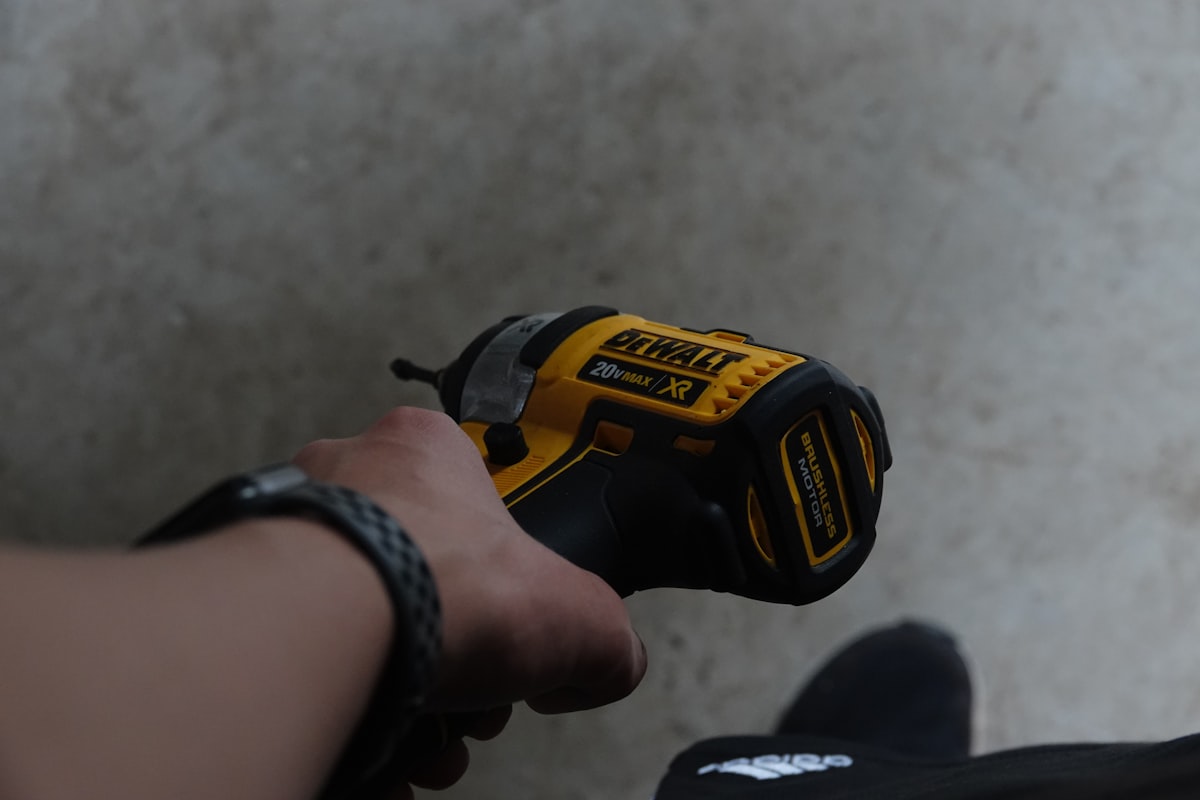
DeWalt's 20V MAX system currently supports over 300 tools on a single battery platform. Milwaukee's M18 system covers over 250. Makita's 18V LXT includes over 300 products. Each platform uses a proprietary battery interface - the physical shape of the connection, the electronic handshake between battery and tool, and the voltage management firmware are all designed to be incompatible with competitors.
This isn't an accident. It's the entire business model.
A contractor who buys a DeWalt 20V MAX drill has made a small investment. The same contractor who then buys a DeWalt circular saw, impact driver, reciprocating saw, and a half-dozen batteries has made a systemic commitment. Each additional tool and battery increases the switching cost. By the time the ecosystem includes 8 to 10 tools and 6 to 10 batteries, the switching cost exceeds the cost of the original tool that started the relationship.
The tool companies understand this perfectly. It's why "bare tool" options exist at all. Selling a tool without a battery at a reduced price makes sense only when you know the customer already owns compatible batteries - meaning they're already locked in. The bare tool isn't a discount. It's a reward for loyalty that's already been captured.
The Economics Nobody Talks About
Battery economics work differently than tool economics, and the distinction matters.
A professional-grade 5.0Ah 18V/20V battery costs between $80 and $140 at retail. The actual manufacturing cost, based on cell pricing and assembly, runs approximately $25 to $35. The markup on batteries is significantly higher than on tools, which is why manufacturer promotions so often take the form of "free battery with tool purchase" - the actual cost of that promotion is far less than the retail price suggests, while the lock-in value is enormous.
Battery lifespan under professional use averages 2 to 3 years or roughly 300 to 500 charge cycles. This means a contractor with 10 batteries is replacing 3 to 5 batteries per year at $80 to $140 each - an ongoing annual cost of $240 to $700 just to maintain the ability to use tools they've already paid for.
This recurring revenue stream is the real prize. Tool sales are one-time events. Battery replacement is annuity income. And because the batteries are proprietary, there's no competitive pressure on replacement pricing from the other major brands. Third-party batteries exist but carry real and perceived risks around warranty, safety certification, and performance consistency that keep most professionals buying OEM.
The total cost of a platform over a 10-year professional career:
Initial tool investment: $2,000 to $5,000. Battery replacement over 10 years: $2,400 to $7,000. The batteries can cost more than the tools. And every dollar spent on batteries reinforces the lock-in because those batteries still work with every tool in the ecosystem.
How Crews End Up On the Same Color
Something interesting happens on job sites that nobody in the marketing department planned for, though they certainly noticed.
Crews tend to standardize on a single platform. Not because a foreman mandates it, but because of battery sharing. When six electricians are working the same floor and one person's battery dies, borrowing one from the guy working ten feet away is faster than walking back to the van. But that only works if everyone's running the same color.
The practical pressure to standardize is enormous. A new hire joining a Milwaukee crew will often sell their DeWalt kit and buy Milwaukee - not because Milwaukee is objectively better for their specific needs, but because battery interoperability within the crew has real productivity value.
This creates geographic clustering. When a major electrical or plumbing contractor in a region runs Milwaukee, their subcontractors tend to migrate toward Milwaukee. The local supply house stocks more Milwaukee. Repair availability follows volume. The ecosystem advantage compounds regionally.
The pattern is visible in supply house sales data. Markets don't split evenly across brands. They tend to skew - 60/30/10 or even 70/20/10 - with the dominant brand varying by region, trade, and the historical choices of the largest local contractors.
The Voltage Wars Were a Lock-In Strategy
The jump from 18V to 20V wasn't what it appeared to be.
When DeWalt launched the 20V MAX system, independent testing confirmed that "20V MAX" batteries delivered 18V nominal voltage under load - the same as every other 18V platform. The "20V" referred to the peak voltage of a fully charged cell pack, a measurement that every 18V battery also technically reaches. The naming was a marketing decision, not an engineering one.
But it accomplished something important. It created a break point. DeWalt's old 18V NiCd tools used a different battery interface than the new "20V MAX" lithium tools. Customers upgrading from the old system couldn't bring their batteries with them. They had to start fresh - and starting fresh on a "20V" system that sounded more advanced than competitor "18V" systems influenced which ecosystem they chose.
Milwaukee took a different approach with the M18 platform, maintaining backward compatibility so that batteries purchased years ago still work with new tools. This continuity protects existing customers' investments but also deepens their lock-in with each passing year.
Makita's 18V LXT similarly maintained battery compatibility across generations, while also introducing the 18Vx2 approach - two 18V batteries powering a single tool to achieve 36V performance. This kept professionals within the 18V LXT ecosystem for tools that previously required corded power, extending the platform's reach without breaking compatibility.
Each strategy serves lock-in differently, but they all serve lock-in.
What the Used Tool Market Reveals
The secondary market for cordless tools tells the lock-in story from the other direction.
"Tool only" listings on resale platforms - tools sold without batteries - consistently sell for 30 to 50% less than equivalent listings with batteries included. The tool without a battery is useful only to someone already locked into that platform. The audience for a bare DeWalt impact driver is exclusively the population of existing DeWalt 20V MAX owners. Everyone else needs to add $100+ in batteries to make it functional.
This also means that switching platforms involves a painful asset depreciation. A professional's existing tool collection doesn't become worthless when they switch - tools can be sold - but the combination of depreciated resale value and new purchase prices makes switching economically brutal. A $4,000 tool kit might sell for $1,500 used, requiring $4,000+ to rebuild on a new platform. That's a $6,500 decision that most people avoid by simply staying put.
The resale data also reveals how quickly orphaned platforms lose value. When manufacturers discontinue a battery design, the tools that use it collapse in resale value. Buyers won't invest in a platform they can't grow. This gives manufacturers enormous power over the lifecycle of their products - and enormous incentive to maintain popular platforms as long as they're generating battery sales.
The Adapter Question
Third-party battery adapters exist. Companies manufacture physical interfaces that allow, say, a DeWalt battery to power a Milwaukee tool. They sell briskly online. The major manufacturers universally warn against them, citing safety concerns around voltage management, thermal protection, and tool calibration.
The safety arguments have substance. Brushless tools in particular rely on communication between the battery management system and the tool's motor controller. An adapter that provides power without that communication handshake can bypass thermal protections, overload protections, and speed management features. The risk isn't zero.
But the existence of a healthy adapter market tells its own story. Professionals are willing to accept some risk to break the lock-in, or at least to bend it. The demand exists because the pain of single-platform commitment is real.
No major manufacturer has moved toward cross-platform compatibility, and none has signaled any intention to. The business model depends on incompatibility. Every compatible battery sold would be a battery that doesn't reinforce exclusive loyalty.
Where This Goes
Battery platform lock-in is getting stronger, not weaker.
The trend across all major manufacturers is to expand what the battery powers. DeWalt's FLEXVOLT system extended the 20V MAX battery to power previously corded tools - table saws, miter saws, planers. Milwaukee's MX FUEL pushed into even heavier equipment - concrete vibrators, pipe threaders, breakers. Each expansion gives the platform more gravity, making the switching cost higher and the ecosystem more indispensable.
Outdoor power equipment is the latest frontier. DeWalt, Milwaukee, Makita, and others have all launched battery-powered lawn mowers, chainsaws, string trimmers, and leaf blowers that run on the same platform as their power tools. A contractor who buys a DeWalt mower isn't just buying a mower. They're adding another anchor to their DeWalt commitment.
The logical endpoint is total tool ecosystem capture - every powered device a professional uses, from impact driver to mower to work light to jobsite radio, running on one battery. At that point, switching platforms doesn't mean replacing tools. It means replacing an infrastructure.
Whether that's good or bad depends entirely on whether you think competition happens between platforms or within them. The manufacturers would argue that competition between DeWalt, Milwaukee, and Makita keeps everyone honest. The contractor writing $500 checks for replacement batteries every year might see it differently.