Stories and observations from the frontier - where the trades meet the real world.
The average journeyman age keeps climbing, nearly half of all apprentices drop out before finishing, and YouTube has become the de facto training platform for an entire generation of tradespeople. Here's what's actually happening to the apprenticeship model - documented with real numbers, real patterns, and zero nostalgia goggles.
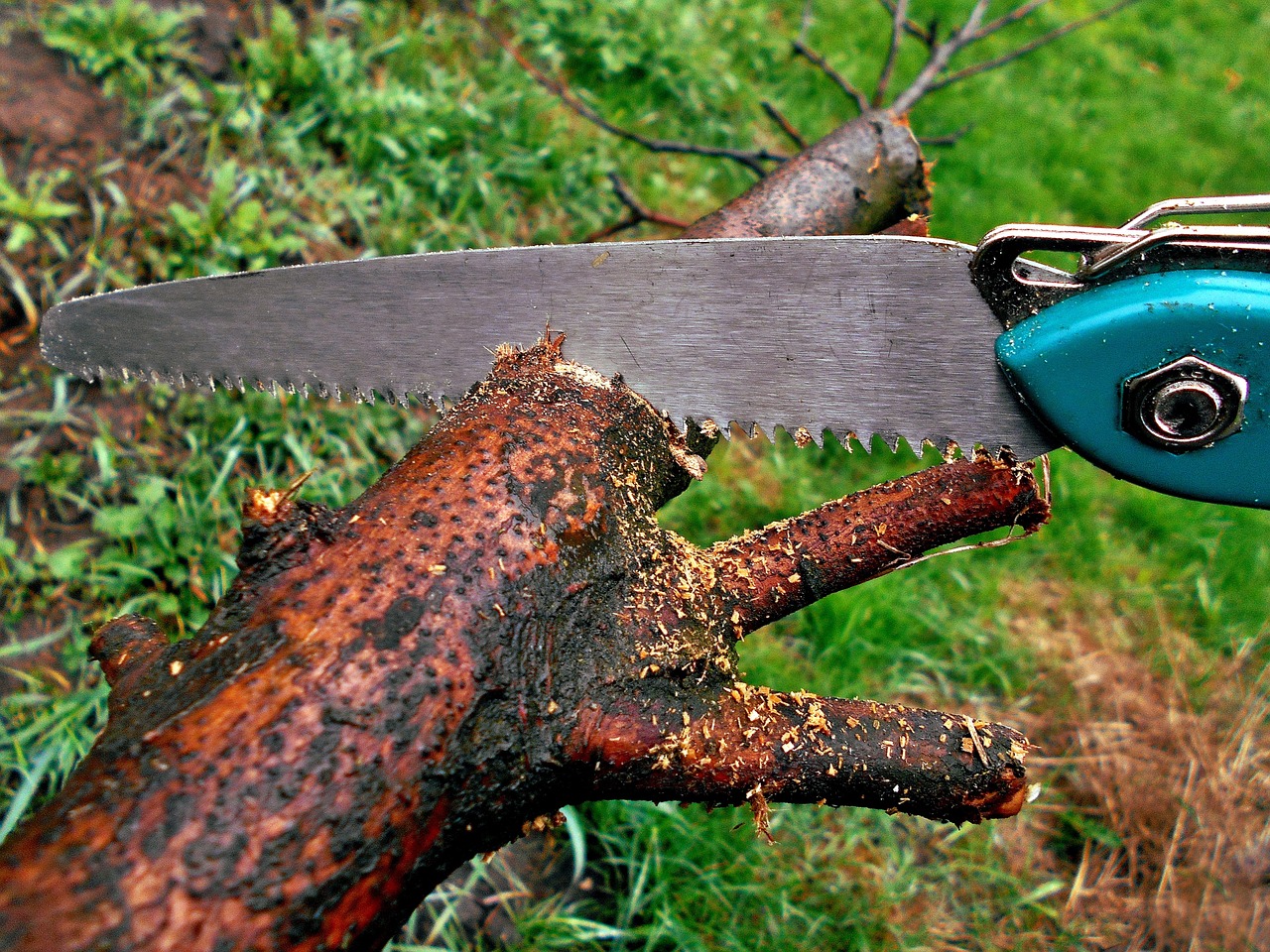
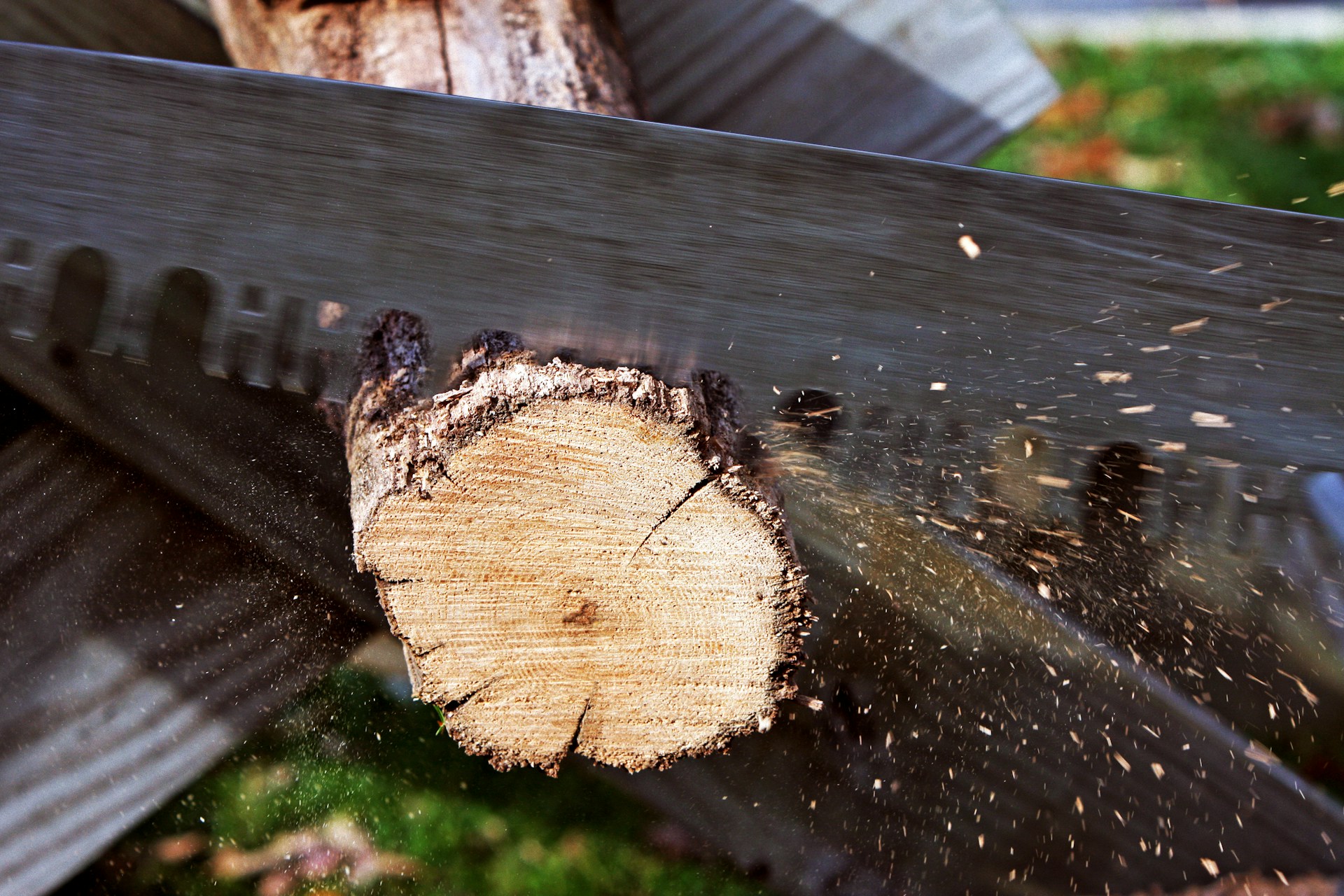
The American frontier wasn't conquered by guns and railroads alone. It was two men on opposite ends of a crosscut saw, eating 10,000 calories a day, clearing a continent one tree at a time. Here's what those tools built - and what vanished when they were replaced.
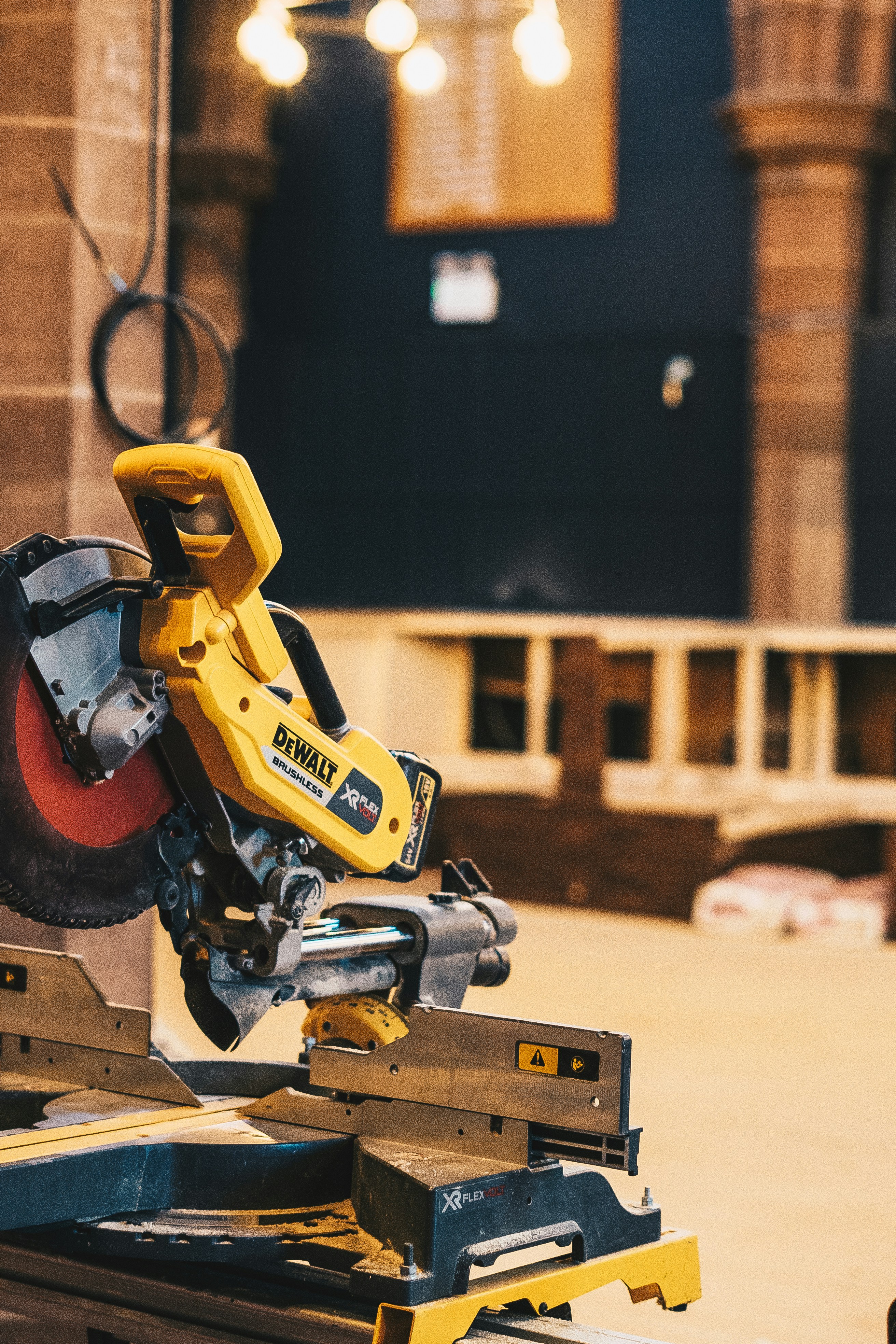
Walk onto any commercial construction site in America and you'll notice something strange - crews tend to run either Milwaukee red or Makita teal. Almost never both. The reasons behind this tribal divide run deeper than brand preference, touching battery lock-in, dealer networks, and trade-specific engineering that shapes careers.
Techtronic Industries owns both Ryobi and Milwaukee - the budget king and the professional standard. How one Hong Kong conglomerate engineers two competing tool lines without destroying either one is a story of deliberate separation, technology trickle-down, and corporate architecture that most buyers never see.
The moment you buy your first cordless tool, you've made a decision about every cordless tool you'll buy for the next decade. The battery platform ecosystem model has fundamentally changed how tradespeople invest in equipment.
The power tool industry's shift to brushless motors has reached 73% adoption - but it's not just changing what tools people buy. It's changing who can fix them, how long they last, and what happens when they break on a job site with no authorized repair shop for miles.
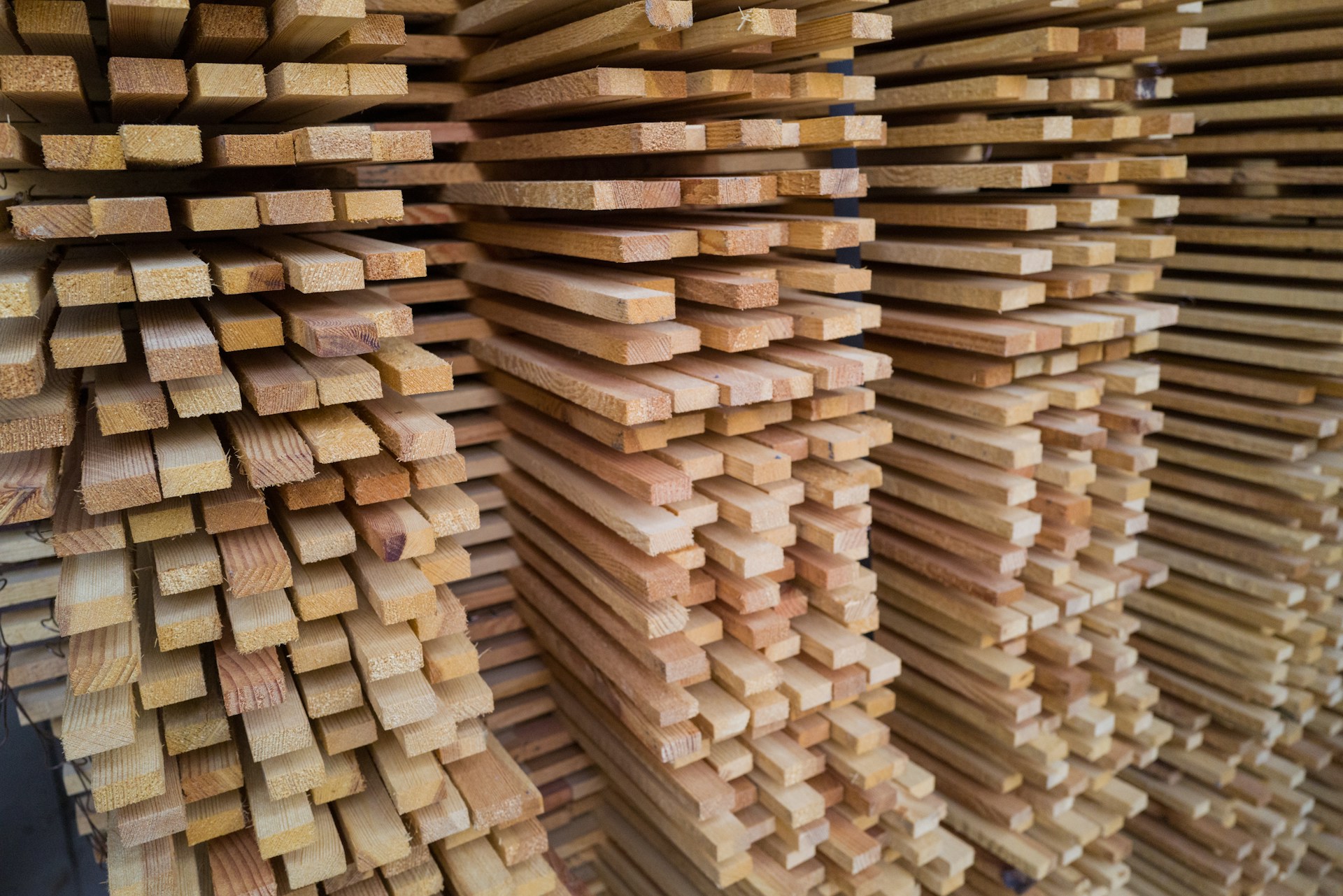
A furniture maker builds a table in January at 25% humidity. By July, the tabletop has swelled three-eighths of an inch. The wood didn't change. The moisture content did.
Figured wood tearout isn't random bad luck. It's a predictable result of grain reversal meeting blade geometry, and the physics explain why some cuts fail and others don't.
A 36-inch bench works perfectly for the person who wrote the plans and causes back pain for everyone six inches taller or shorter. The formulas disagree with each other because different tasks need different heights.
A technical examination of workshop dust collection performance. Understand CFM losses and static pressure with this detailed analysis of what happens in real shop conditions.
Pull a saw blade from a day of ripping pine and it's coated in sticky pitch resin. Pull the same blade from a day of cutting oak and it's clean but dull. Two completely different failure modes, hidden behind a naming convention that tells you nothing about either one.
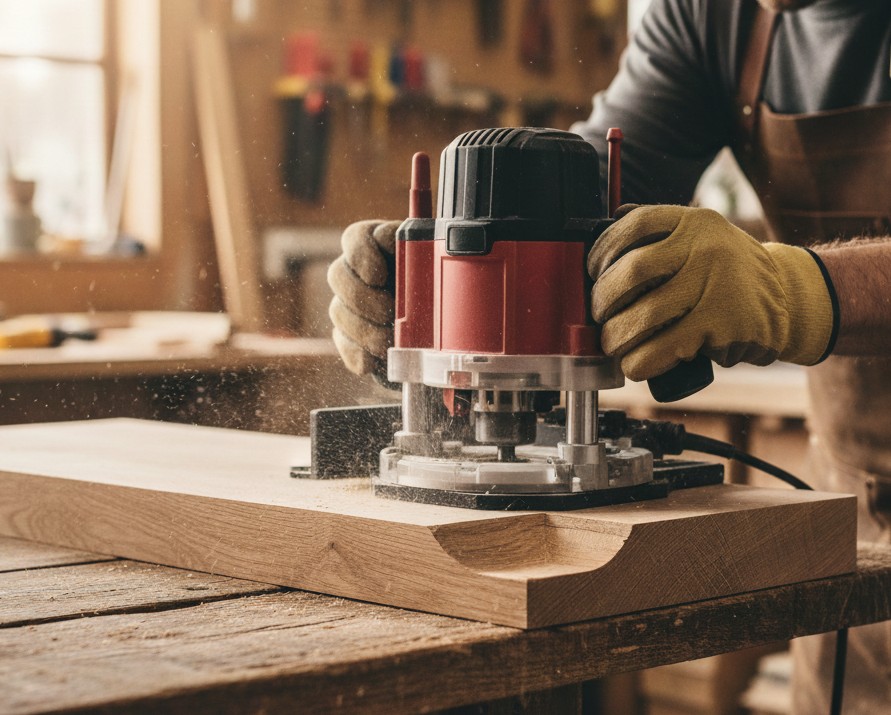
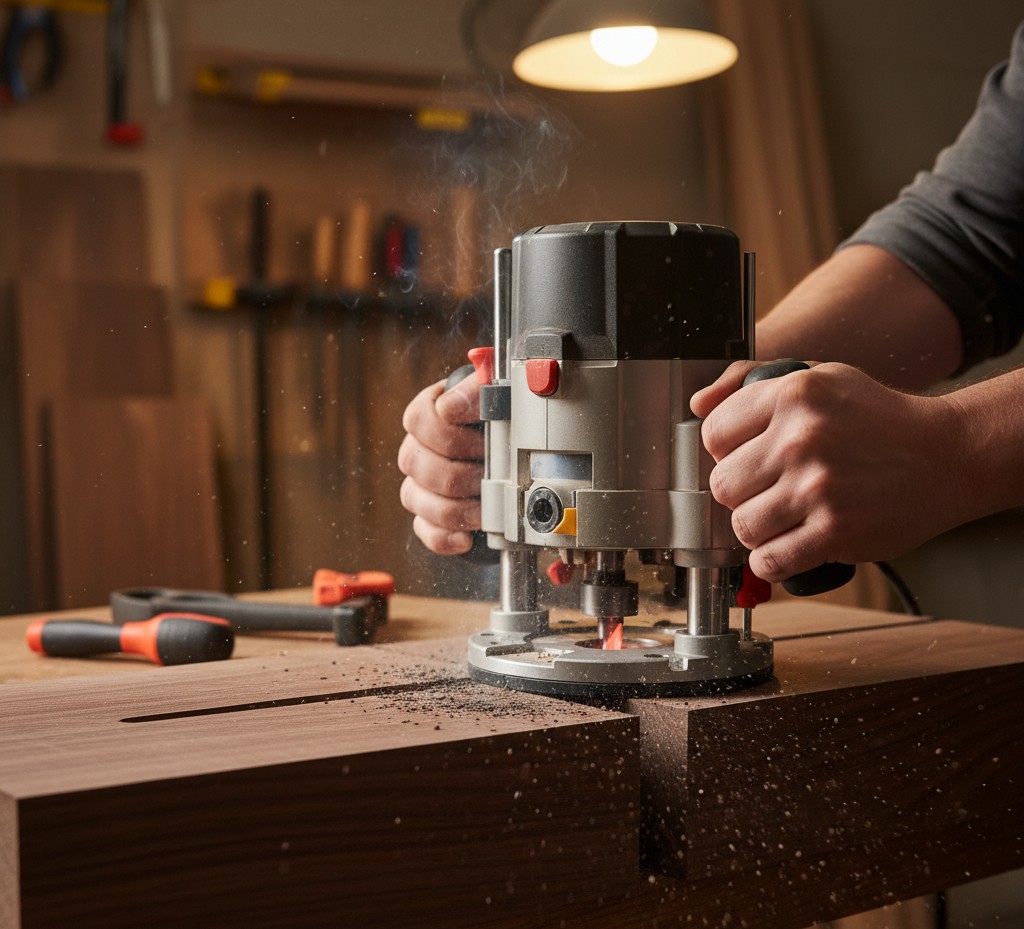
Same motor. Same bit. Same collet. Flip the tool upside down, bolt it under a flat surface, and the physics of routing reverse completely. Feed direction, force dynamics, danger profile, workflow - everything inverts with the tool.
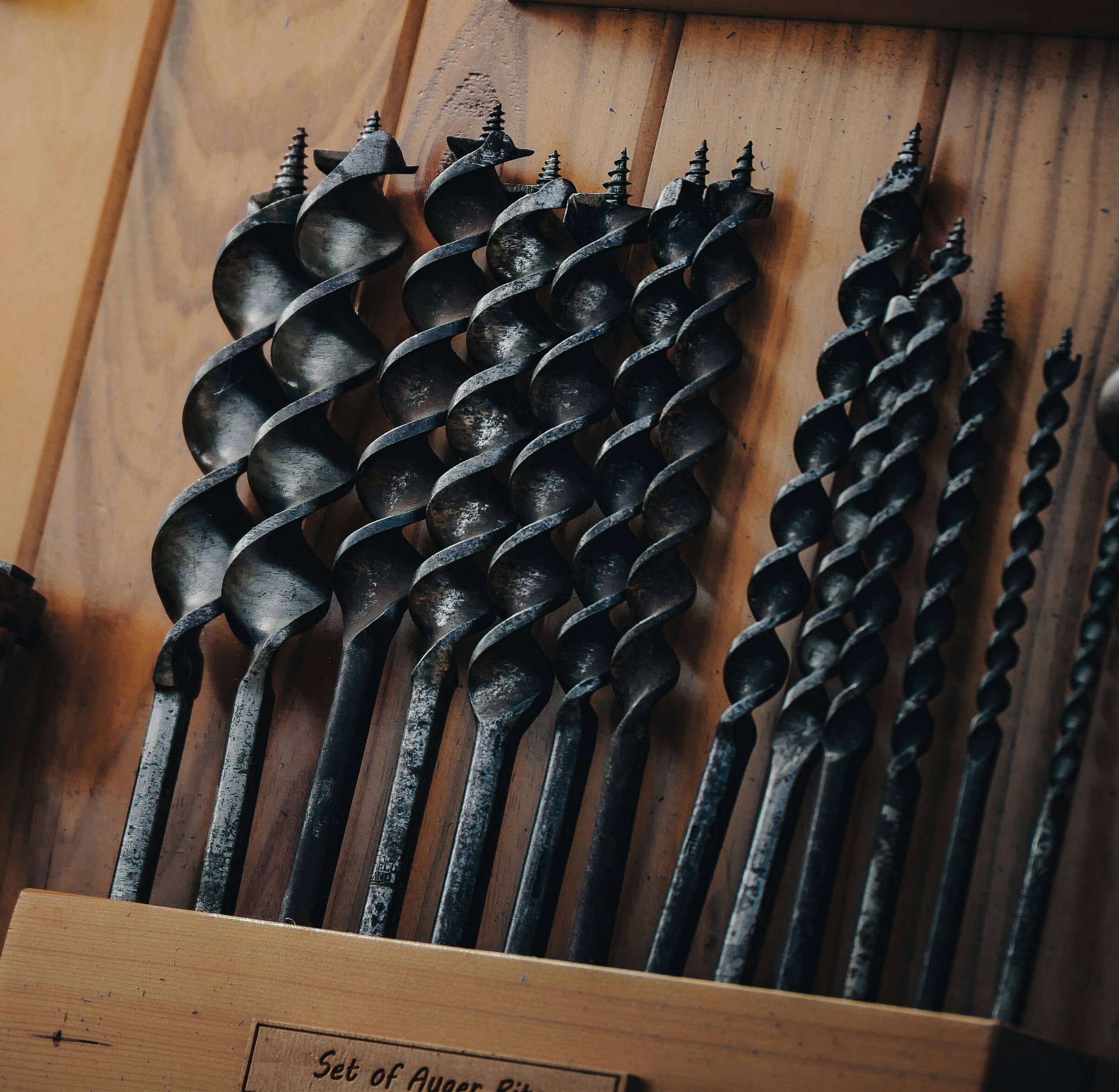
Auger bits self-feed through thirty joists without stopping. Spade bits cost a dollar and cut fast until they hit a nail. Every rough-in electrician carries both because structural lumber drilling is a two-strategy problem.
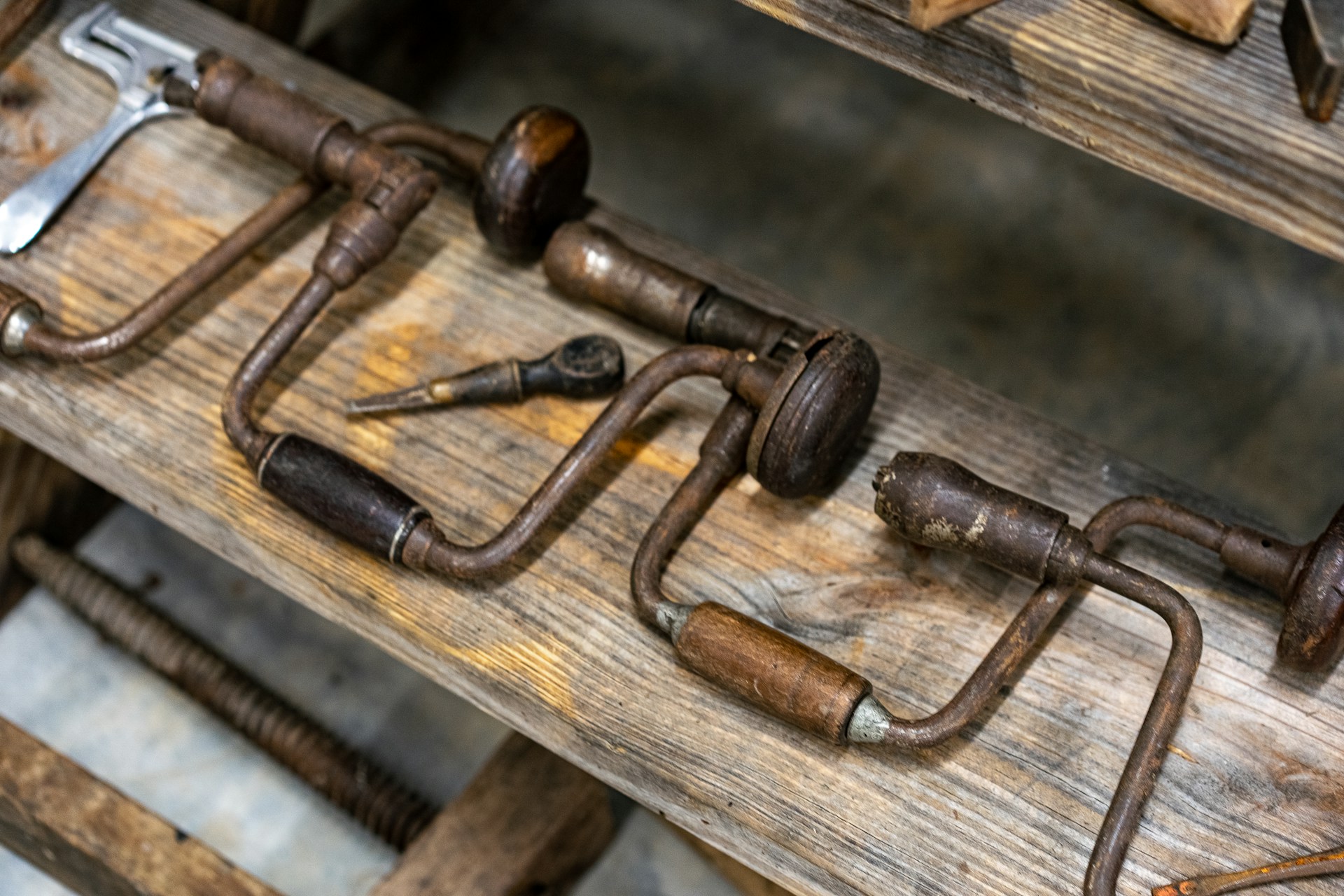
A hand-cranked brace delivers full torque at zero RPM, never runs out of battery, and cuts cleaner holes in hardwood than most cordless drills. The 150-year-old tool that refuses to become obsolete.
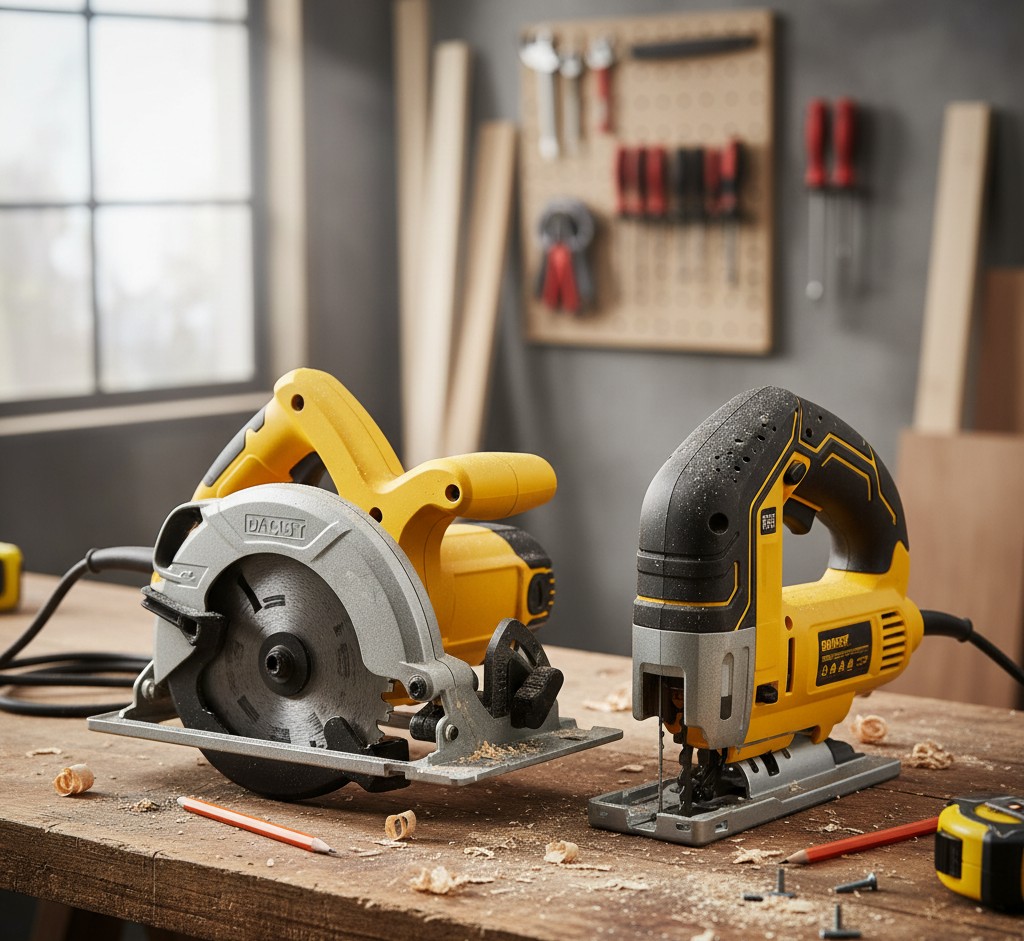
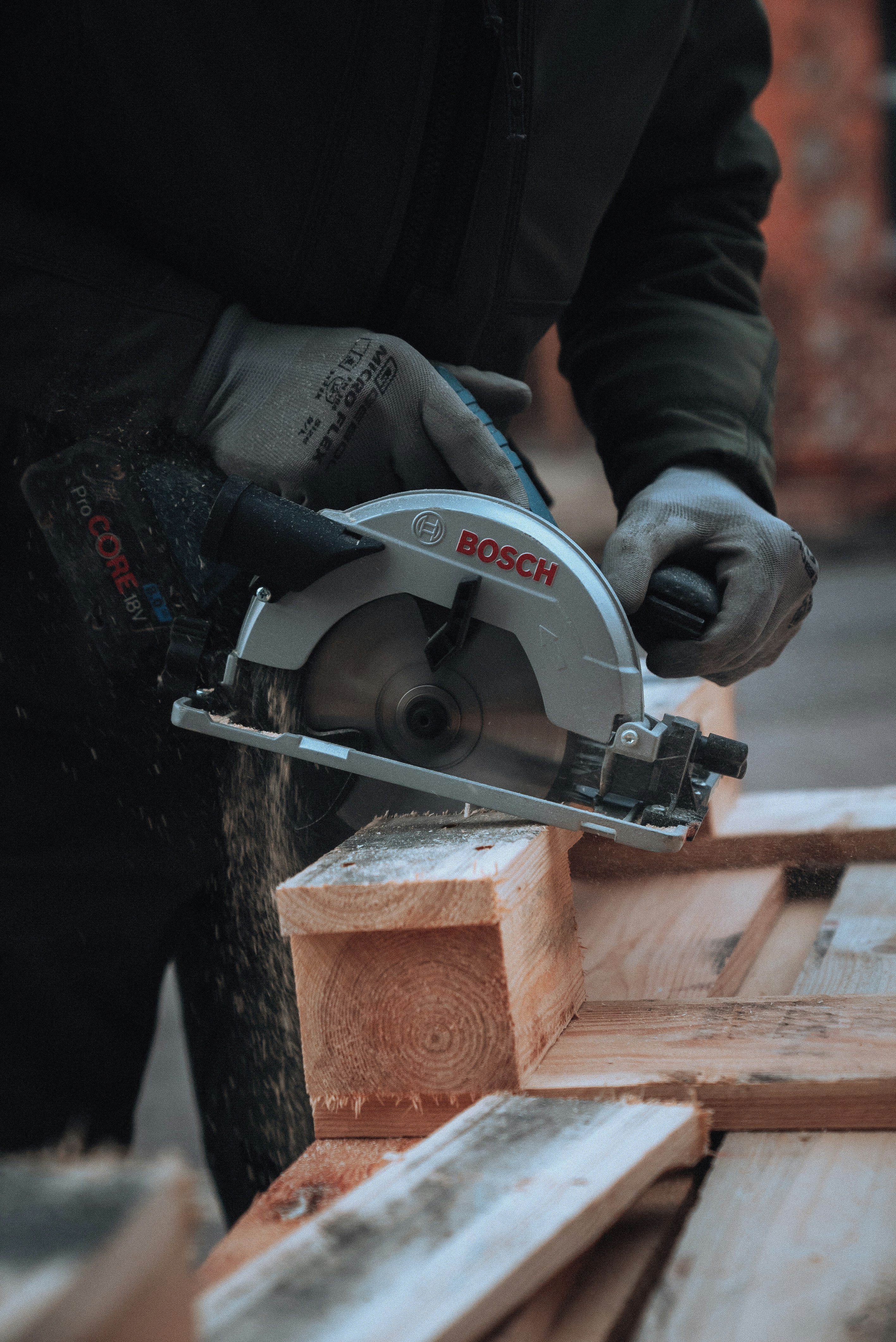
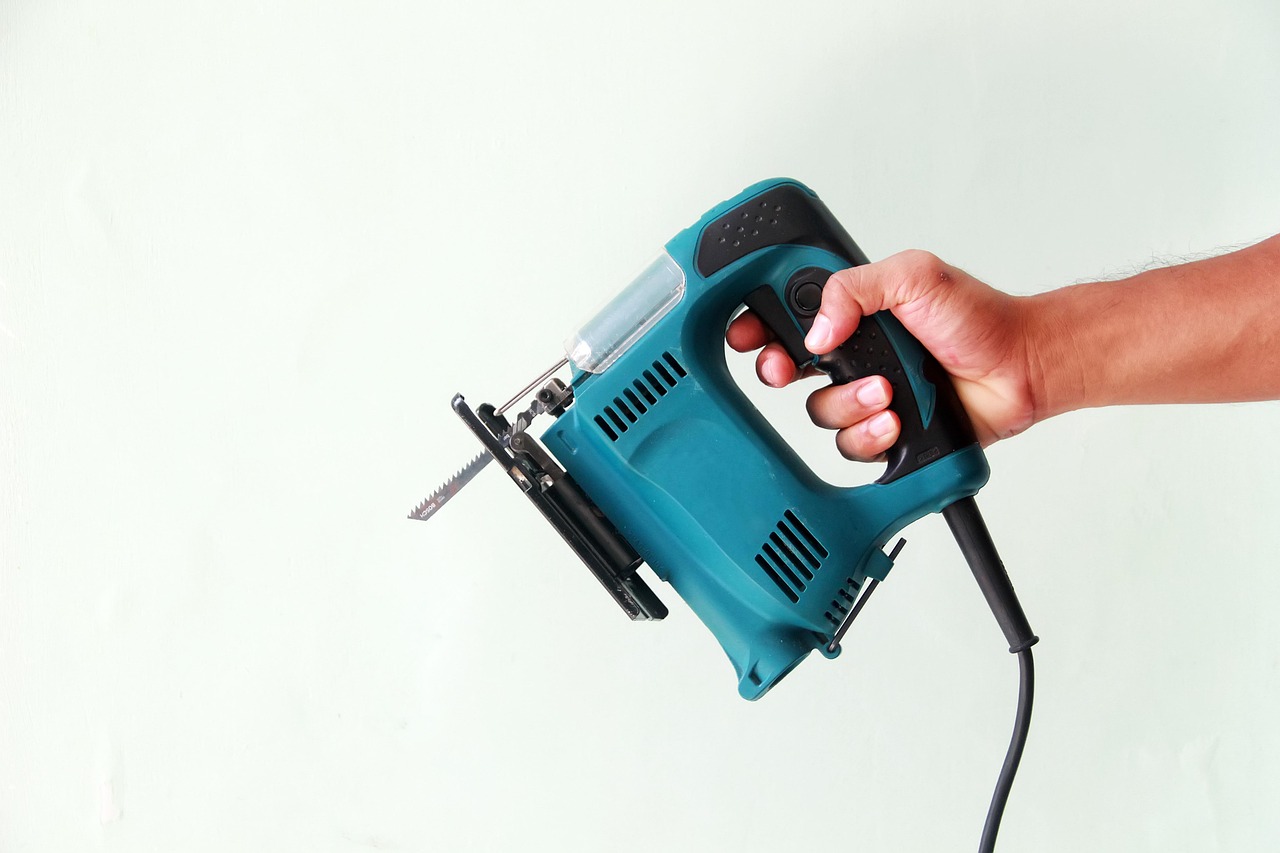
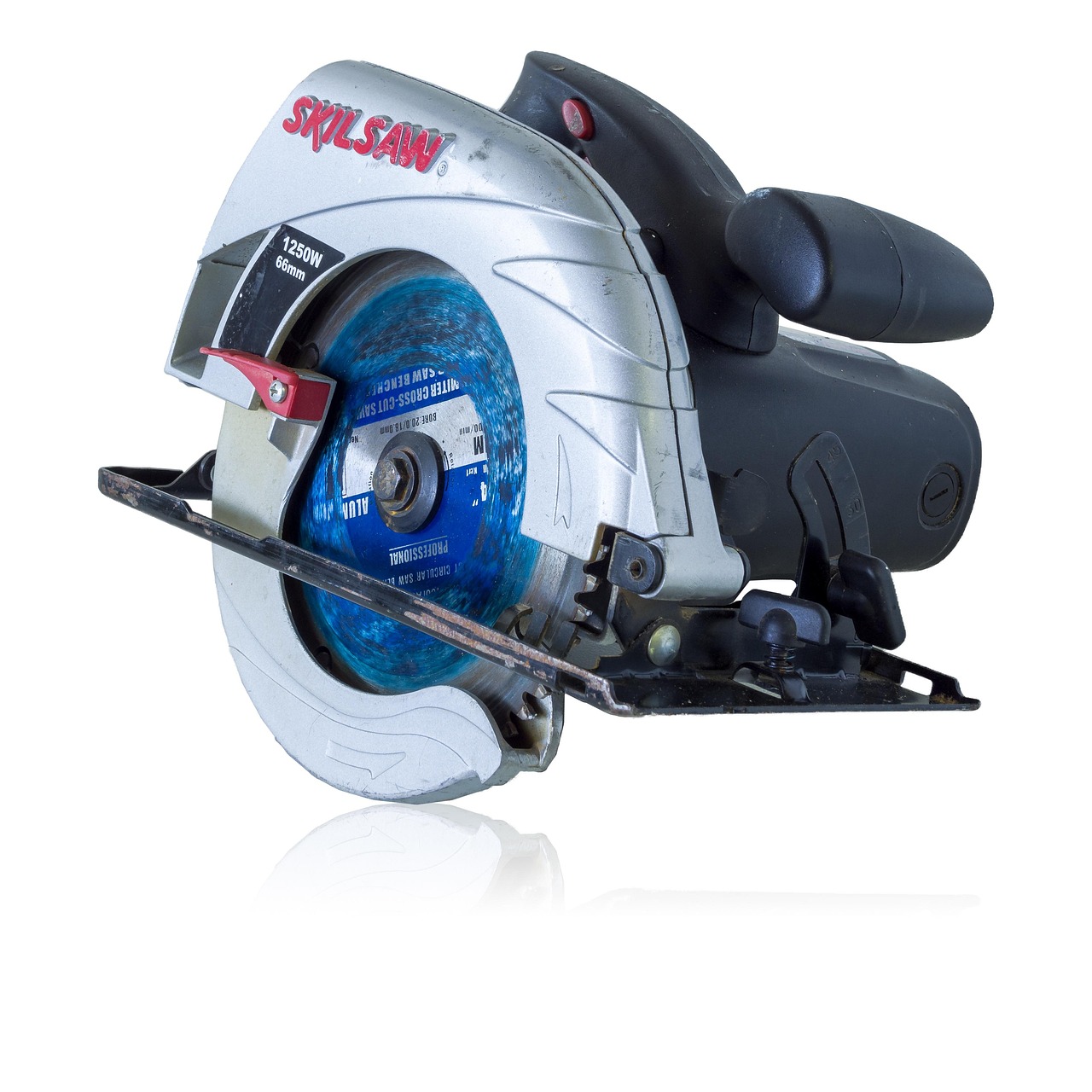
The circular saw handles 80% of cuts on any job site. The jigsaw handles 15%. Neither tool has eliminated the other because straight lines and curves demand different physics - and the 5% of cuts that overlap is where it gets interesting.
The reciprocating saw was born for demolition. The jigsaw was born for curves. They share the same blade motion and live in the same toolbox - and the proximity tells you something real about how construction work actually flows.
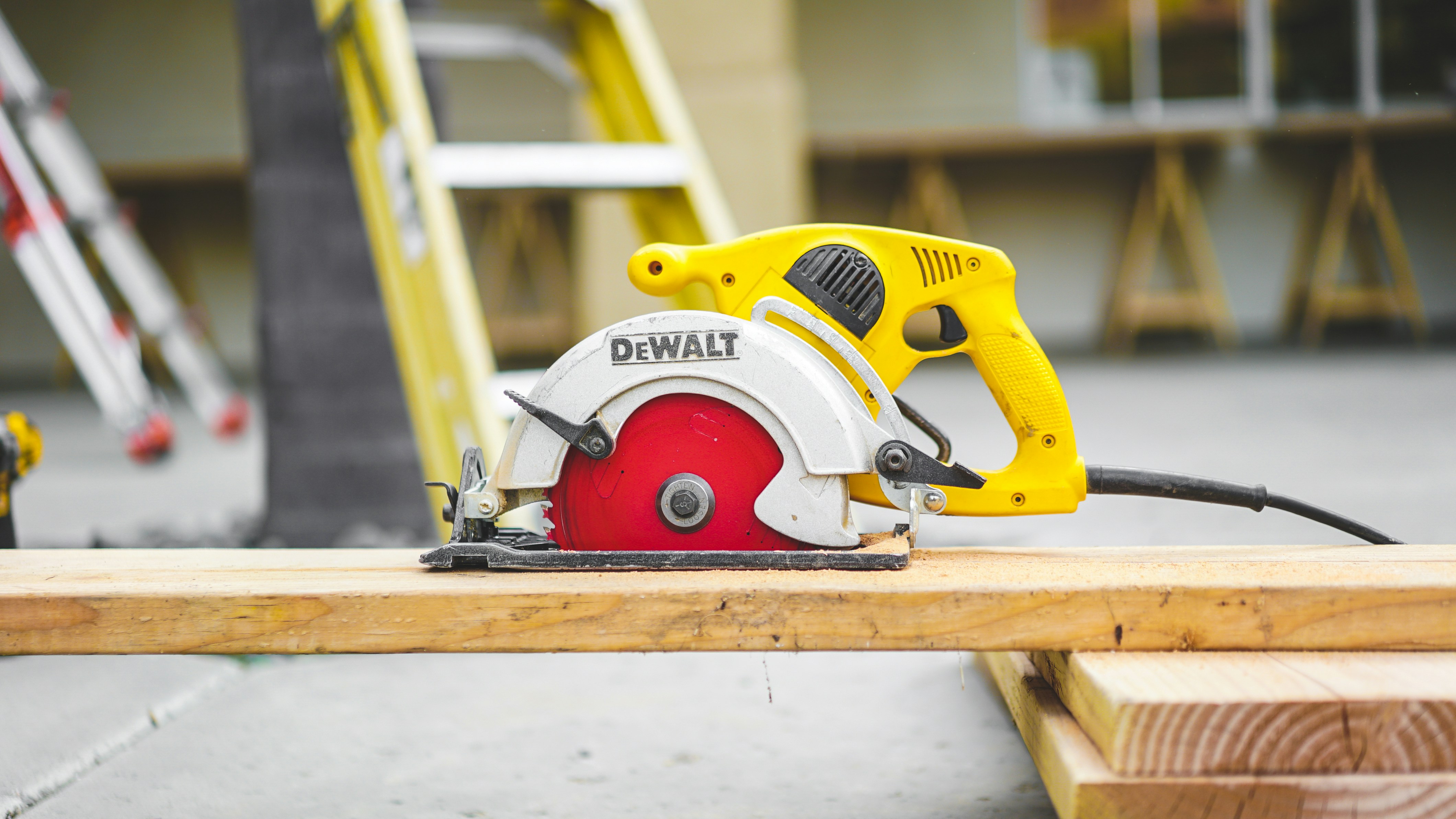
Makita and DeWalt don't just compete - they represent two fundamentally different engineering cultures. One refines from Anjo, Japan. The other iterates from American industrial tradition. The tools tell that story.
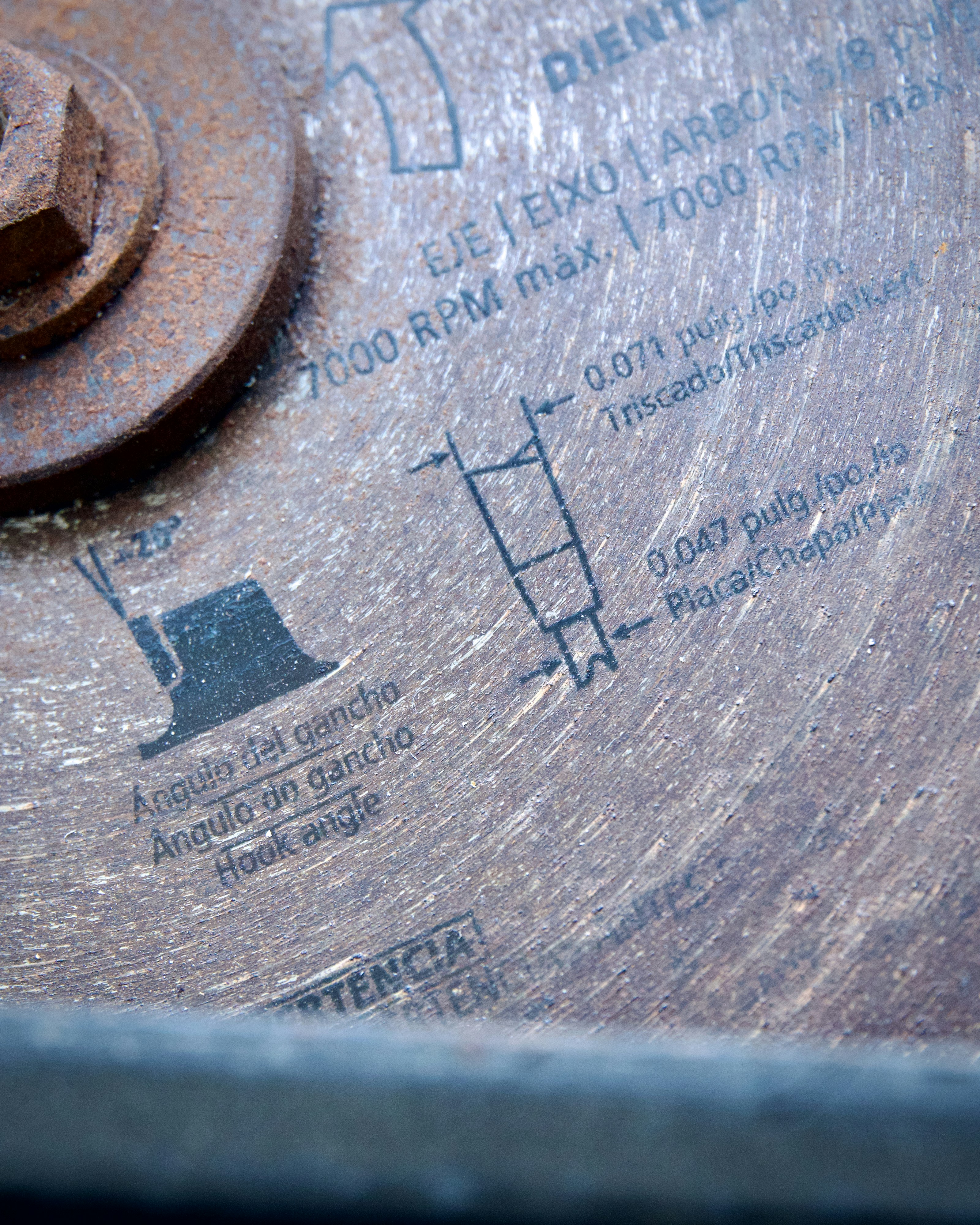
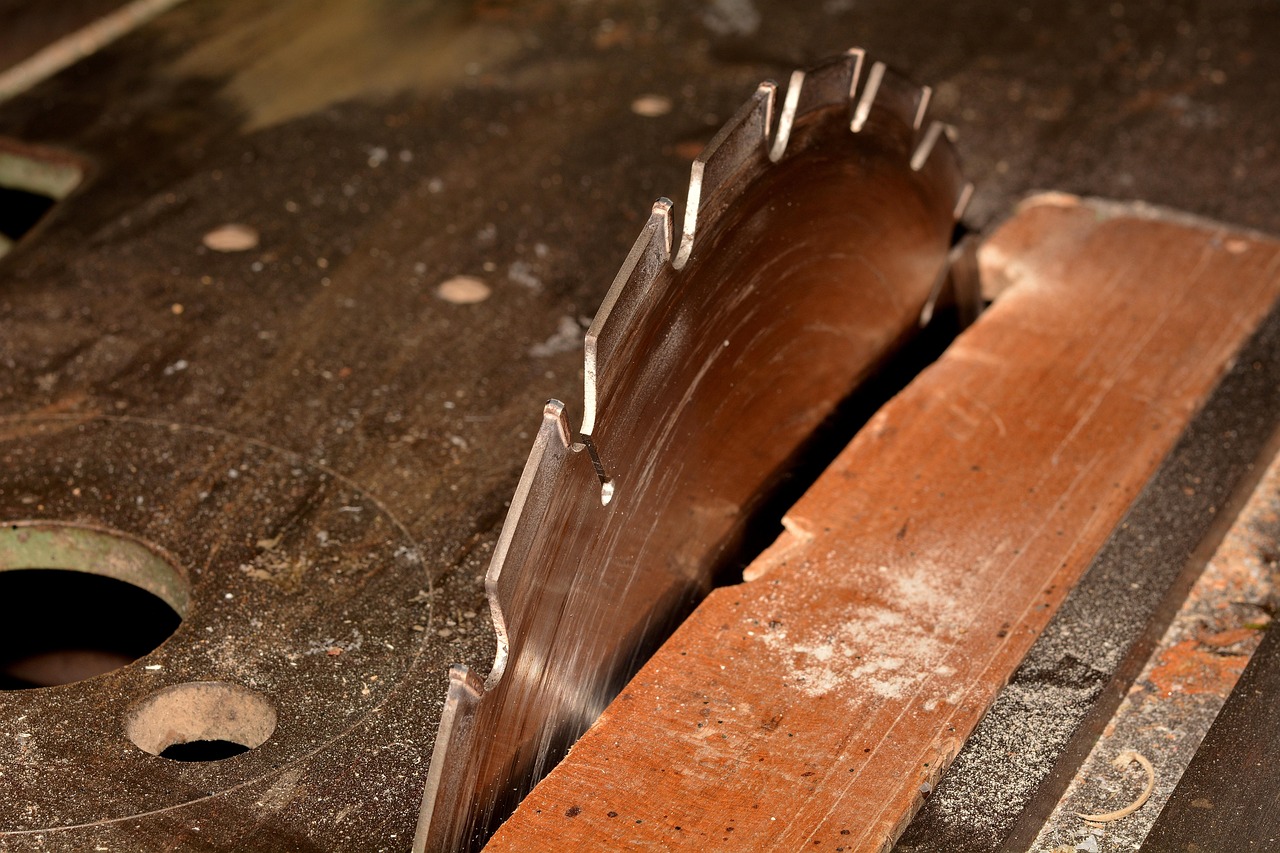
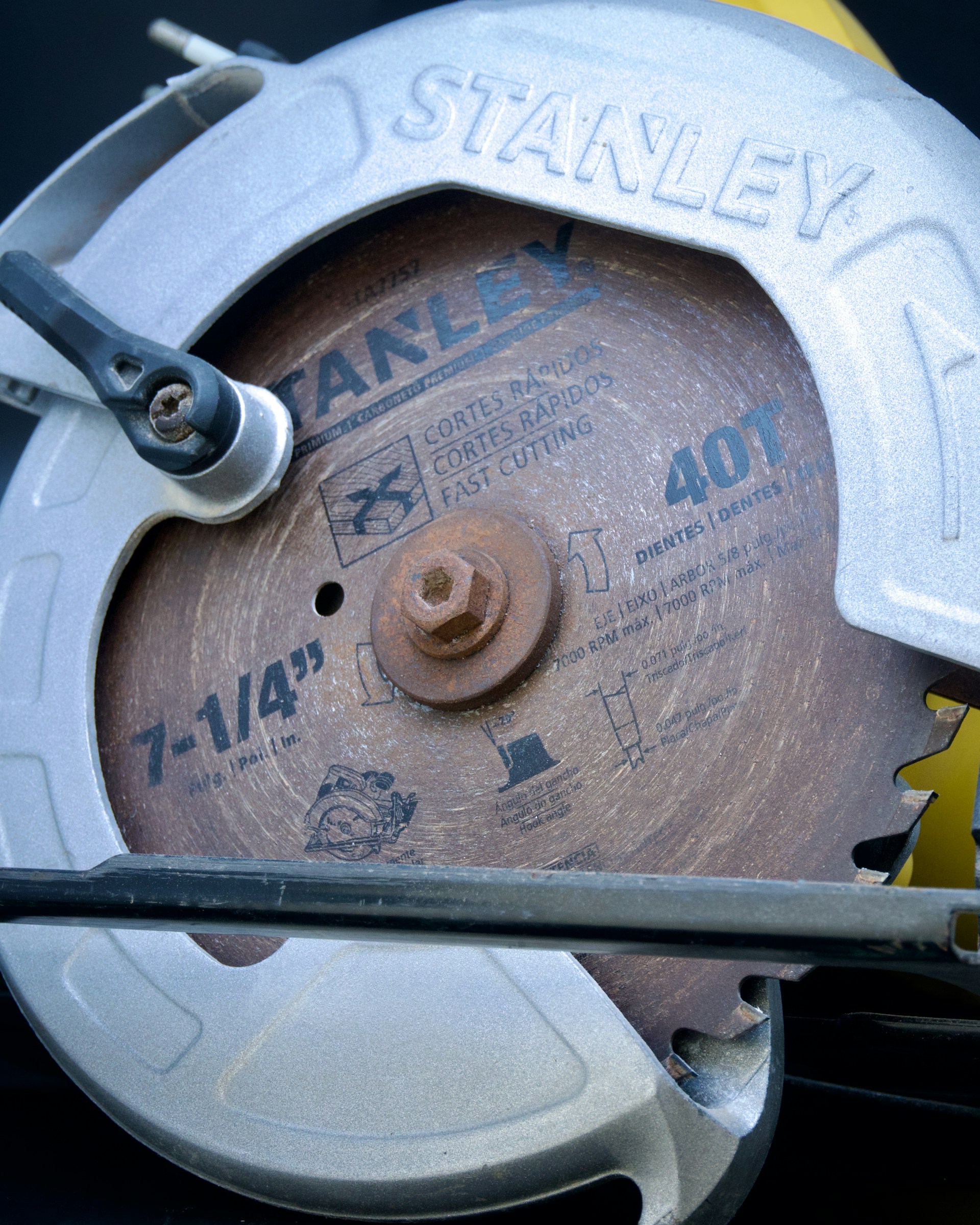
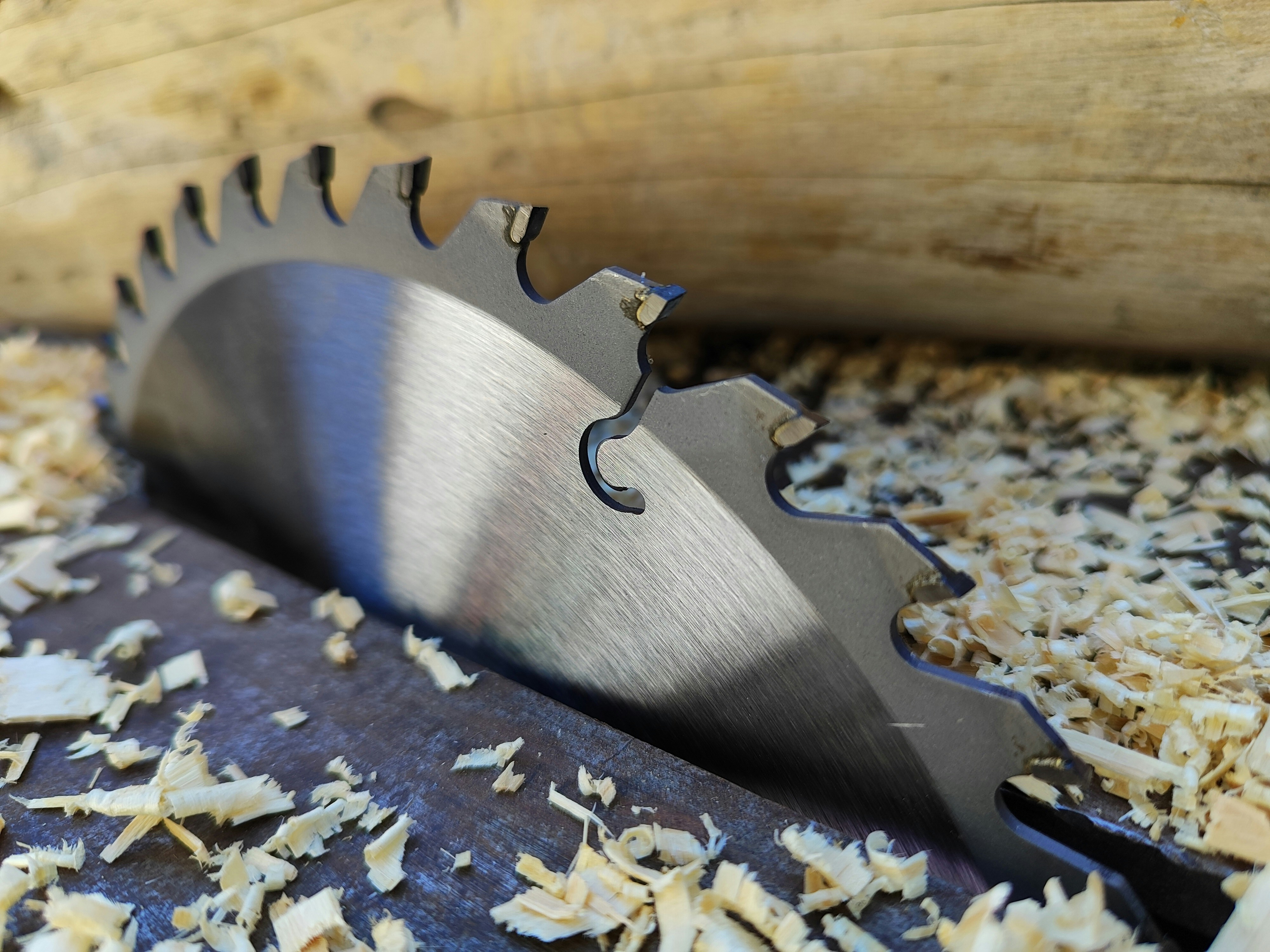
A circular saw blade is a thin steel disc that flexes under cutting load. When it flexes far enough to rub the kerf walls, friction generates heat that expands the blade into tighter contact. The feedback loop ends in binding.
The blade guard closes in about a tenth of a second. Kickback moves the saw several inches in a tenth of a second. That timing mismatch defines the limits of a safety device racing an emergency that gets a head start.
Blade binding occurs when wood pinches the spinning blade from both sides simultaneously, preventing forward cutting while the blade continues rotating at full speed. Understand the tooth-level mechanics that trigger violent kickback.
Gravity pulls unsupported wood downward during cutting, closing the kerf behind the blade. The pinching develops progressively - barely detectable for the first 80% of the cut, then accelerating through the final inches where kickback strikes.
Template routing has two independent heat sources. The bearing you forgot about is preheating your bit body before the cutting edge even touches wood - and by the sixth piece, the system's too hot for clean cuts.
Route along the edge with the grain and the bit glides through. Turn ninety degrees into end grain and everything changes. The physics of severing 250,000 fibers per square inch explains the scorch marks.
Wood resin melts at cutting temperatures, flows into carbide micro-crevices, and hardens into built-up edges that crush fibers instead of cutting them. The feedback loop that follows explains why performance degrades so fast.
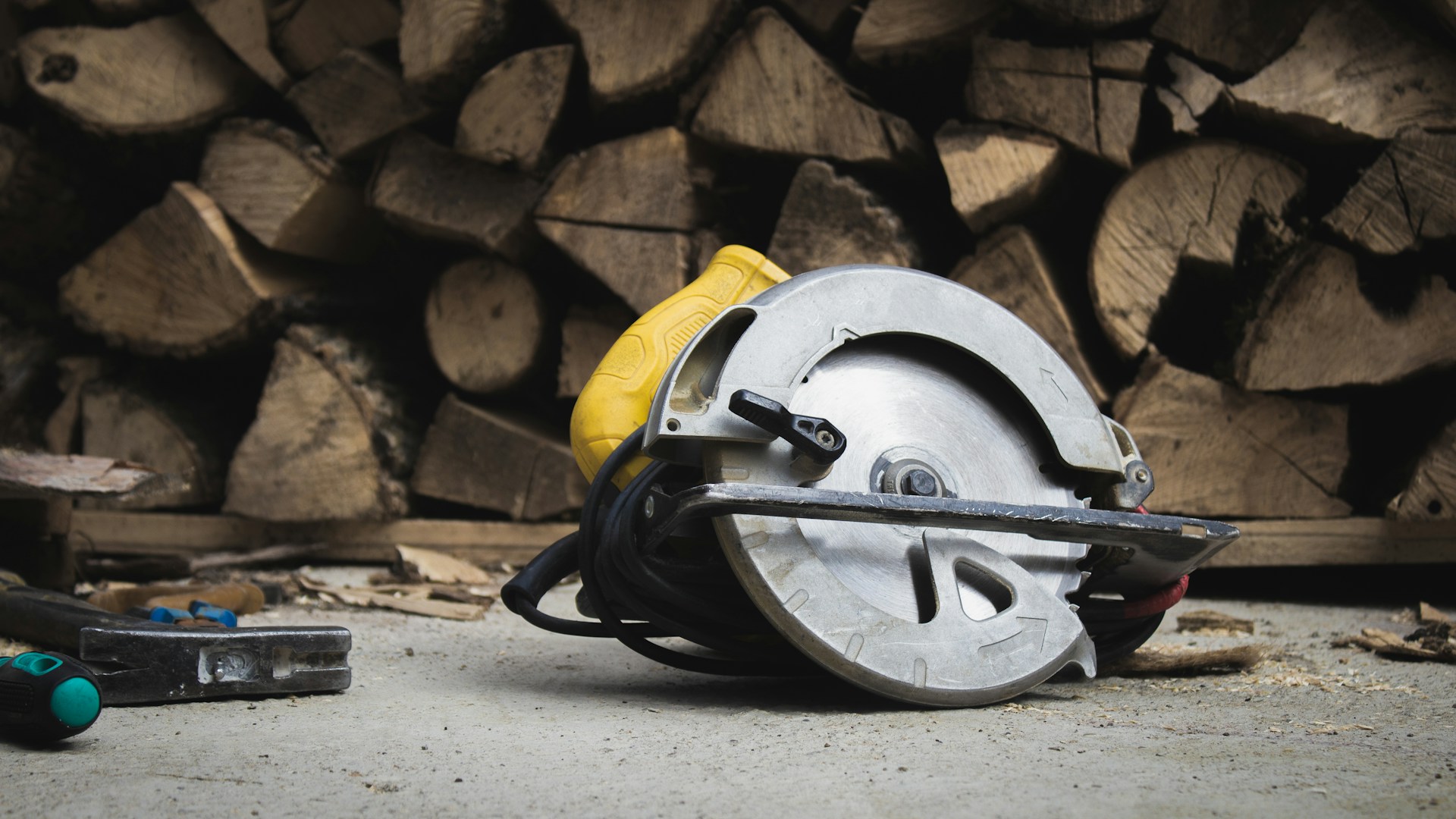
Circular saws kick back when blade binding creates rotational force that drives the saw toward the operator. The physics of pinching, blade deflection, and why unsupported wood causes violent reactions.
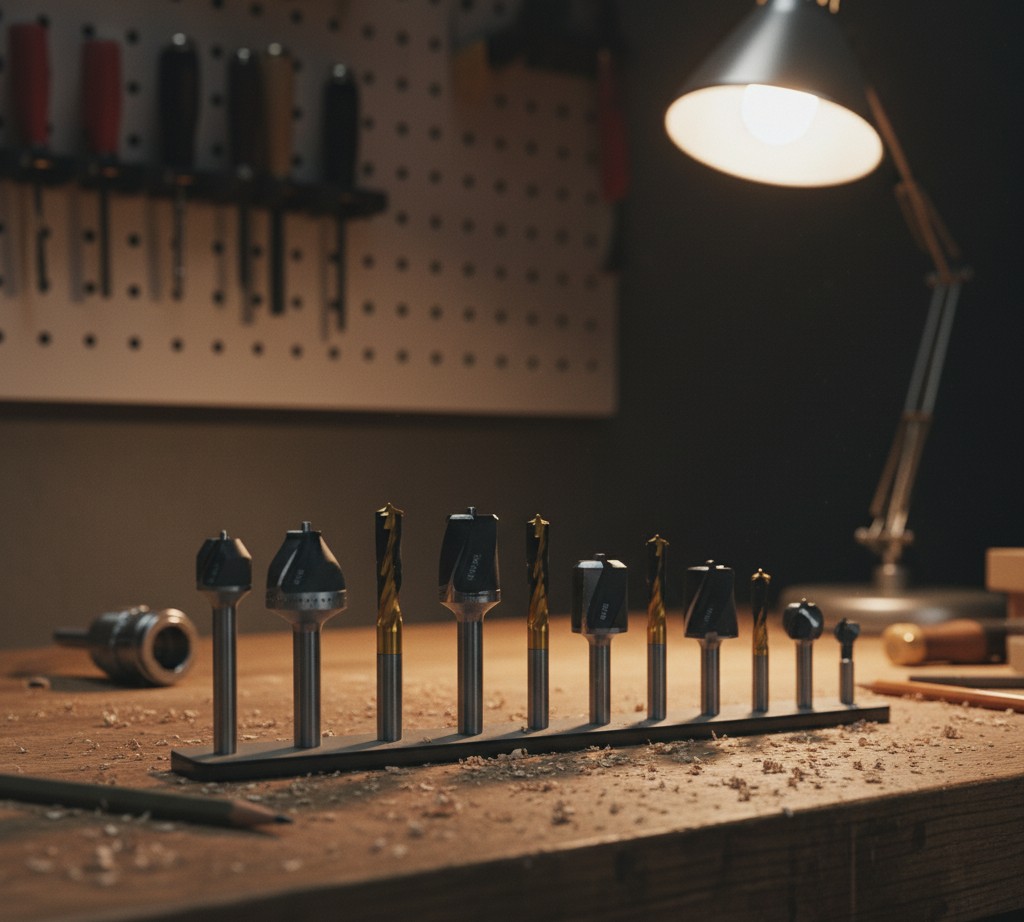
A 2-inch router bit spinning at 22,000 RPM has cutting edges moving at nearly 120 mph. The physics of why larger bits generate exponentially more friction heat - and why variable-speed routers exist.
Moving a router too slowly keeps wood fibers in contact with hot carbide longer, building heat until charring begins. The counterintuitive truth: speeding up usually fixes burning. Slowing down makes it worse.
Plywood adhesive contains particles harder than the wood it bonds. Every glue line a router bit crosses is a thin strip of abrasive grinding carbide while melting onto cutting edges. The math explains the shortened tool life.
Router bits burn wood when carbide edges generate friction heat faster than it dissipates. The physics of feed rate, tip speed, material density, and resin chemistry explain why that acrid smell shows up when it does.
Bailey planes use a frog perched on narrow ribs. Bedrock planes seat the frog across a fully machined bed. The mounting geometry creates real performance differences - and the market prices them accordingly.
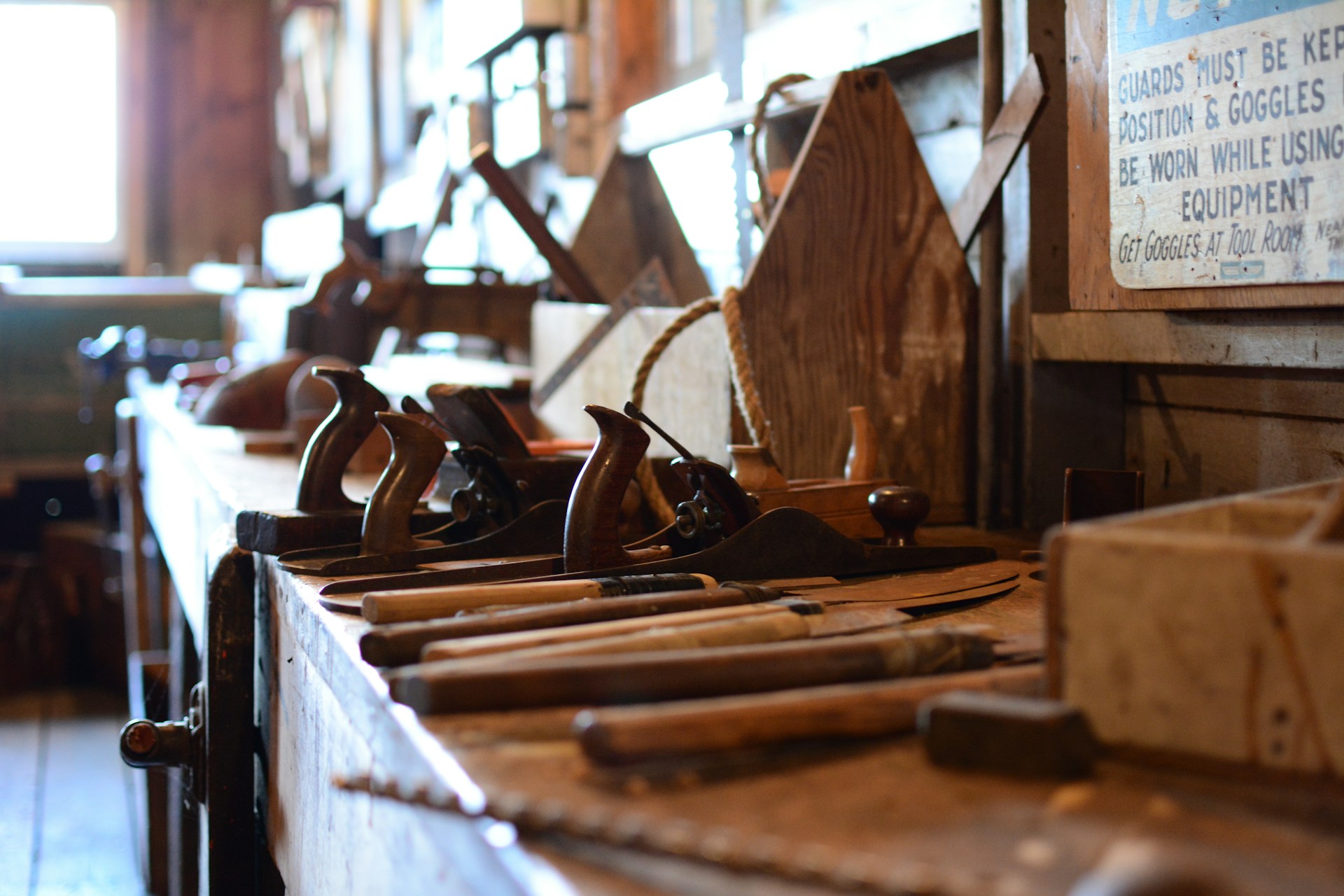
A 1925 Stanley plane often outperforms one made yesterday. The reason isn't nostalgia - it's specific manufacturing practices involving cast iron, machining tolerances, and assembly standards that later economics eliminated.
Both planes extend their blades to the body's edge for corner access. But a rabbet plane creates profiles from flat stock while a shoulder plane trims existing joinery to fit. The distinction changes which one belongs in your chest.
Specialized planes handle joinery fitting, recess cutting, and profile work that bench planes and block planes can't reach. Most woodworkers need exactly one or two of them - but which ones depends entirely on the work.
Hand planes range from 3-inch palm tools to 24-inch jointers. Each length, angle, and configuration solves a specific physics problem that the others can't.
Every hand plane on the bench cuts parallel to the sole. The router plane doesn't. Its blade points straight down, and that one difference creates capabilities nothing else in the tool chest can replicate.
The combination gauge exists. It does both marking and mortise work. Experienced woodworkers refuse to use it. Why does the market offer simplicity that craftspeople reject?
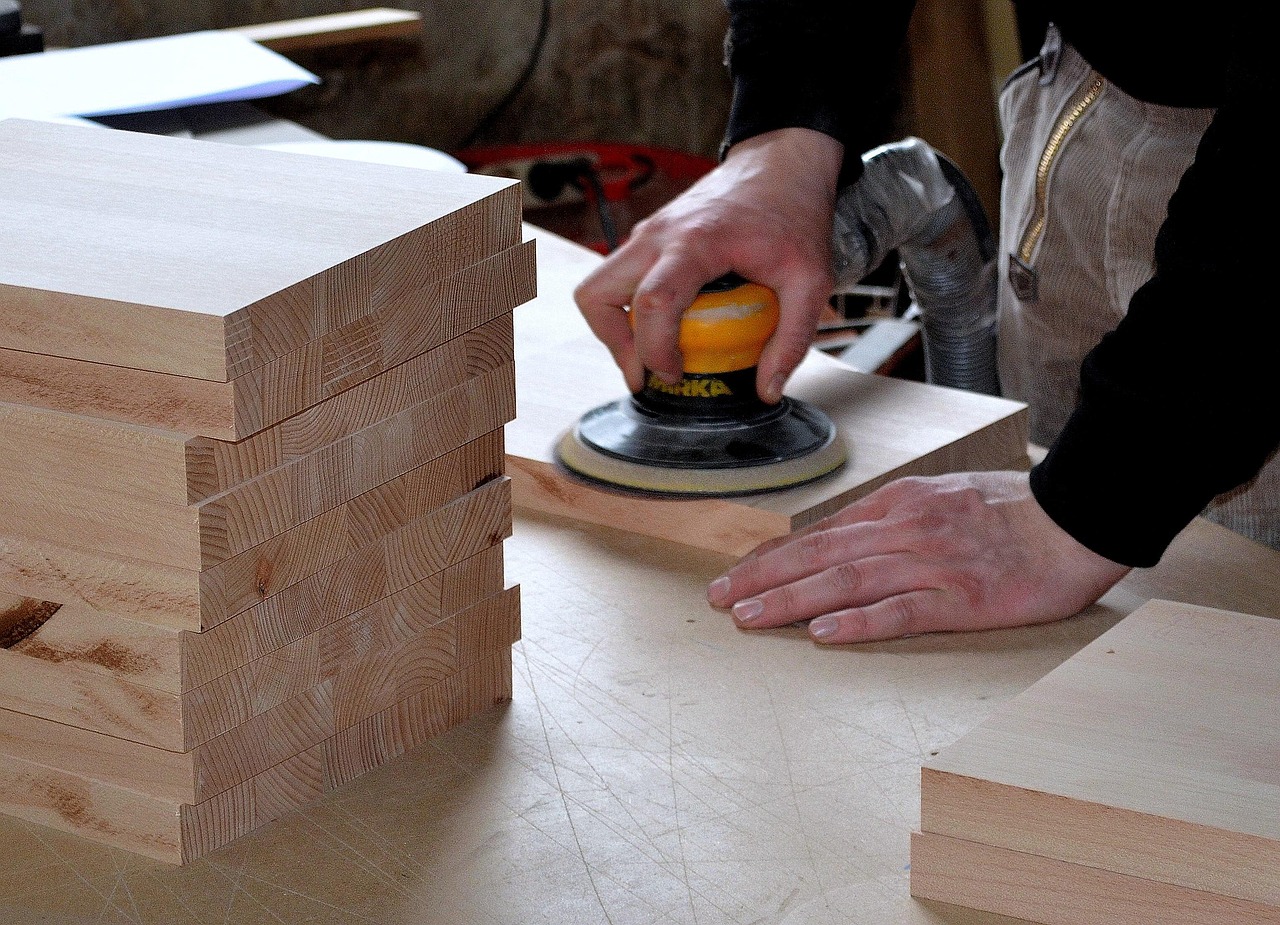
The hook and loop system that holds detail sander paper in place fails through predictable physics - heat deformation, dust contamination, and plastic fatigue. The fix starts with understanding the failure.
Self-centering dowel jigs promise automatic alignment. The mechanism is elegant. The physics guarantee it can't deliver the precision it implies - and the entire product category exists in the gap between promise and tolerance.
Bevel-down locks the cutting angle at 45 degrees and adds a chipbreaker for tearout control. Bevel-up lets you change the angle by resharpening. Same family. Opposite engineering.
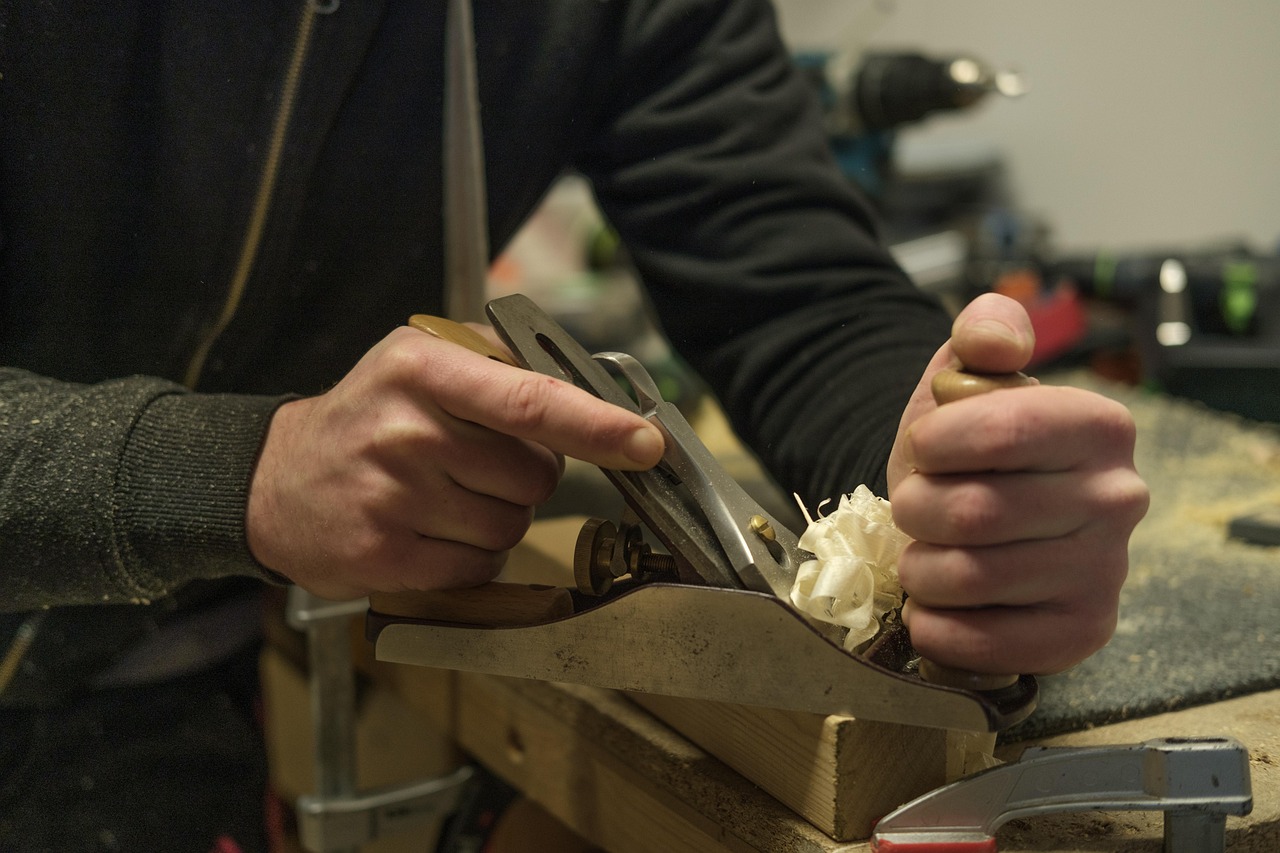
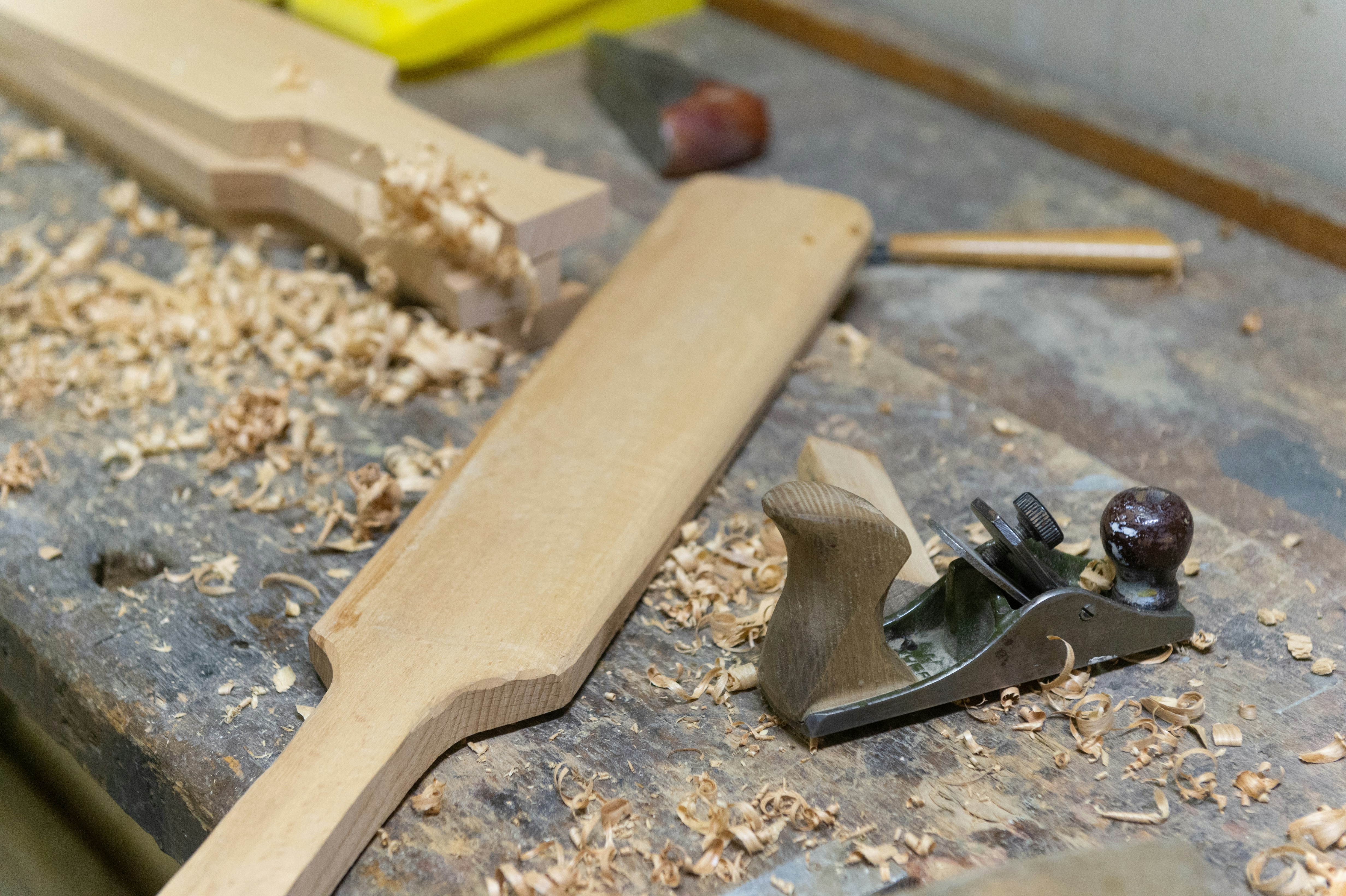
A hand plane is a sharp wedge riding a flat sled across wood. Everything else - the frog, the chipbreaker, the adjustment mechanisms - exists to support those two functions.
The dust bag on your belt sander captures maybe 20 percent of what the tool generates. The other 80 percent becomes the air you breathe. Here's why collection fails and what the numbers actually mean.
Every belt sander mark tells a specific story about what happened between tool and wood. Horseshoe gouges, parallel lines, diagonal tracks - the defect reveals the cause.
Cartridge grease costs six times more per ounce than bulk. The savings sound obvious until you've spent fifteen minutes with grease up to your elbows fighting air pockets in a barrel you can't quite thread back together.
Grease gun PSI ratings keep climbing past 12,000, but during normal operation most guns generate 2,000 to 4,000 regardless of their maximum rating. The extra capacity sits there unused until something goes wrong.
A 1940s Stanley No. 4 costs $50. A new budget plane costs $60. A premium Lie-Nielsen costs $375. Three prices for what appears to be the same tool - the gap between them reveals how manufacturing economics shifted across a century.
The chipbreaker sits a fraction of a millimeter from the blade edge and forces every shaving to curl so sharply that fibers break before they can tear ahead of the cut.
Marketing departments emphasize PSI while burying flow rate in footnotes. Fleet maintenance logs show that oz/min predicts actual job time more accurately than any other specification on the data sheet.
Every grease gun will eventually leak. Why seal failure is inevitable, what timeline to expect, and whether repair or replacement makes economic sense.
A 14-inch sole bridges enough surface to straighten edges, flatten moderate panels, and smooth faces. With two blade setups, one jack plane covers an absurd amount of territory.
Cordless grease guns cost four times what manual guns cost. Fleet maintenance logs show exactly when that money buys genuine time savings - and when a lever-action gun sitting on the wall works just as well.
Block planes, jack planes, and smoothing planes look like the same tool at three sizes. They're not. Each performs fundamentally different operations on wood, and the differences come down to physics.
A 6-inch block plane and a 22-inch bench plane aren't different sizes of the same tool. They're different tools entirely, designed for operations that don't overlap.
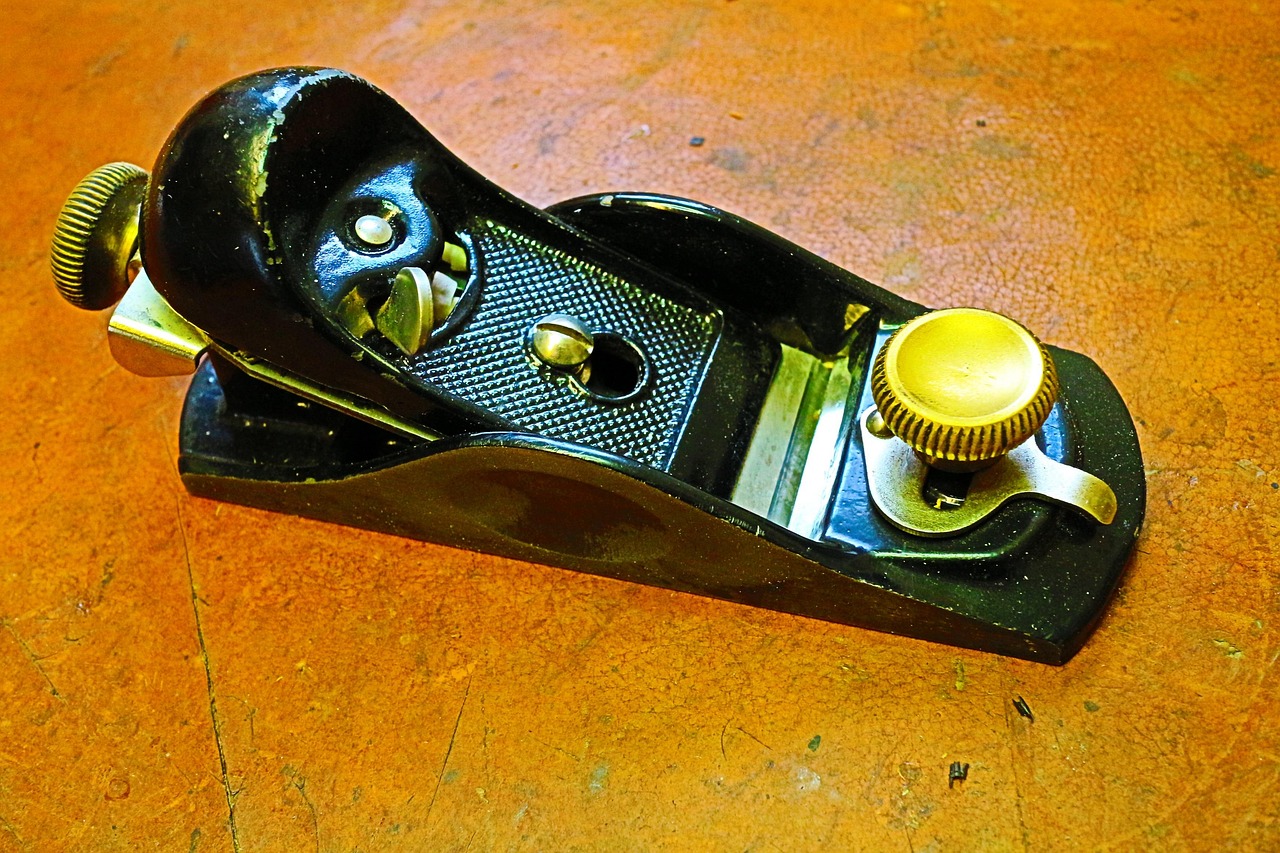
Six inches long and 1.5 pounds creates a tool your palm controls completely. The compact geometry isn't just convenient - it defines what block planes do and why bench planes can't replace them.
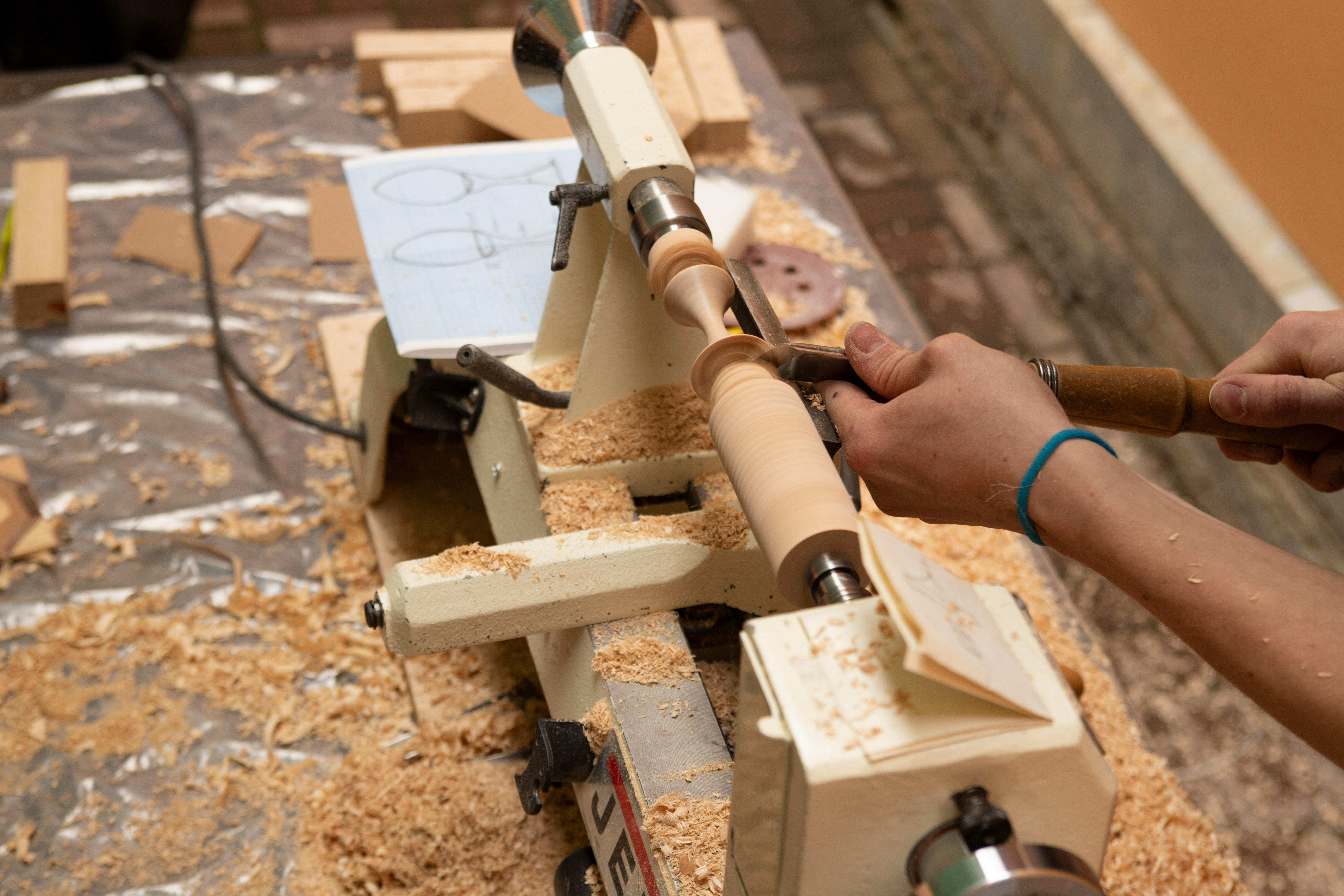
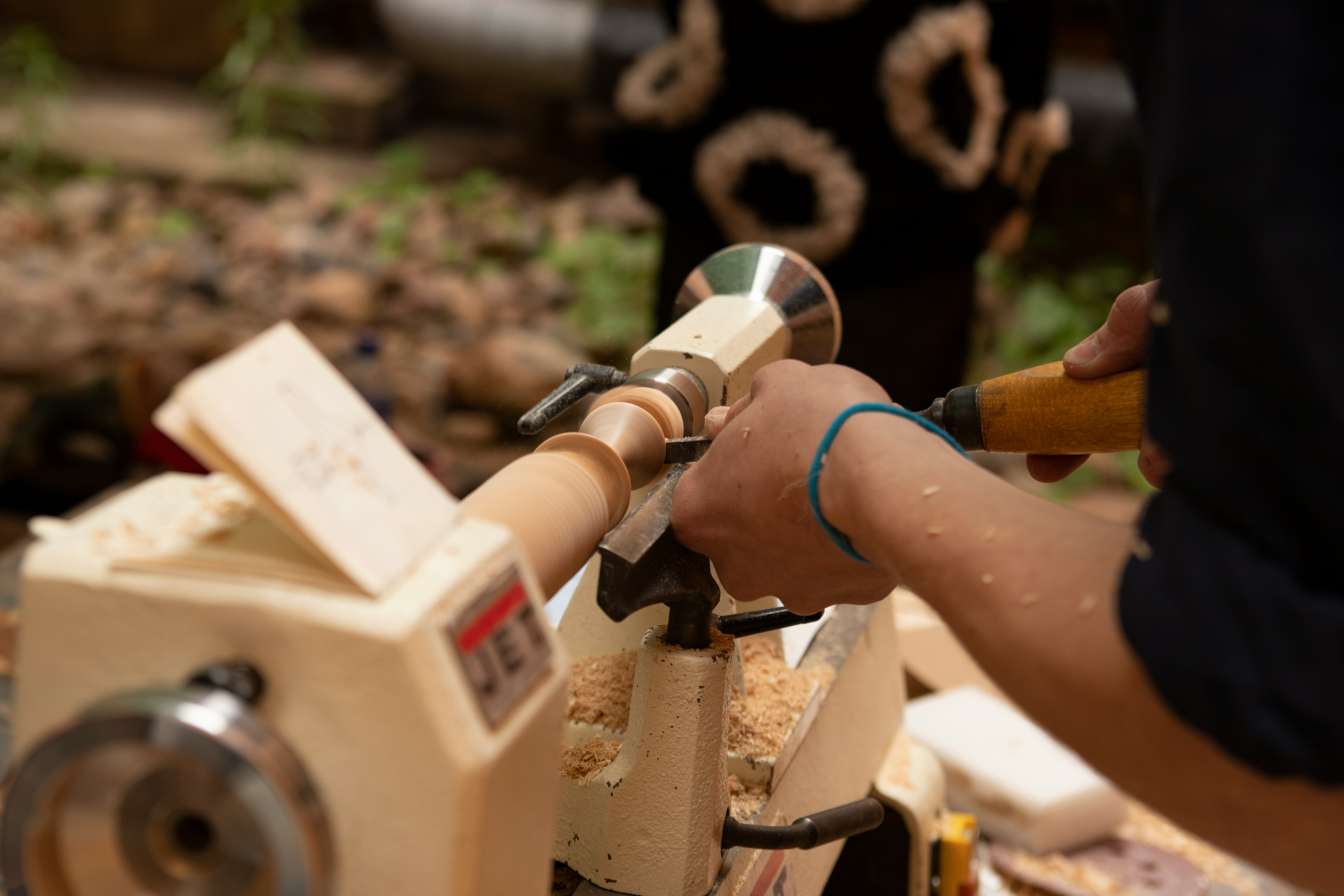
A 2 HP motor at bowl-turning speed delivers 0.4 HP. The nameplate number describes performance at 1750 RPM - a speed where nobody does the work that demands power.
A pulley guarantees torque multiplication through geometry. A VFD promises it through electronics. Both spin wood. The question is which promise you trust when the bowl blank fights back at 400 RPM.
A lathe's two capacity numbers measure perpendicular constraints for work that barely overlaps. One limits diameter. The other limits length. First-time buyers assume both describe general size.
A wood lathe that weighs 200 pounds does something a 50-pound lathe physically cannot. The relationship between mass and vibration dampening is the reason serious lathes are built like anchors.
End grain cuts across fiber ends instead of along fiber length. A 37-degree blade slices those ends cleanly. A 45-degree blade pushes through them. Eight degrees changes everything about how wood responds.
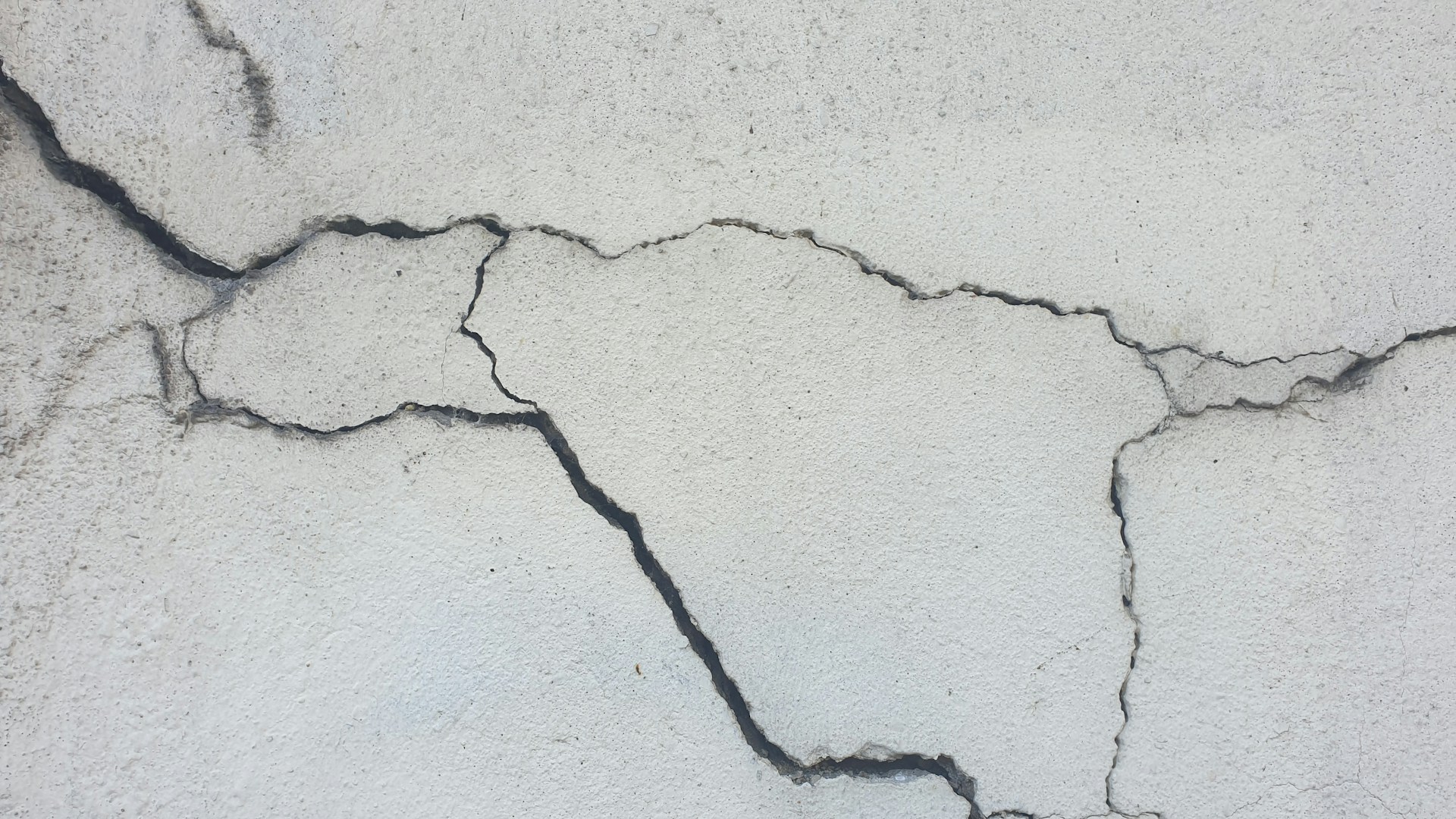
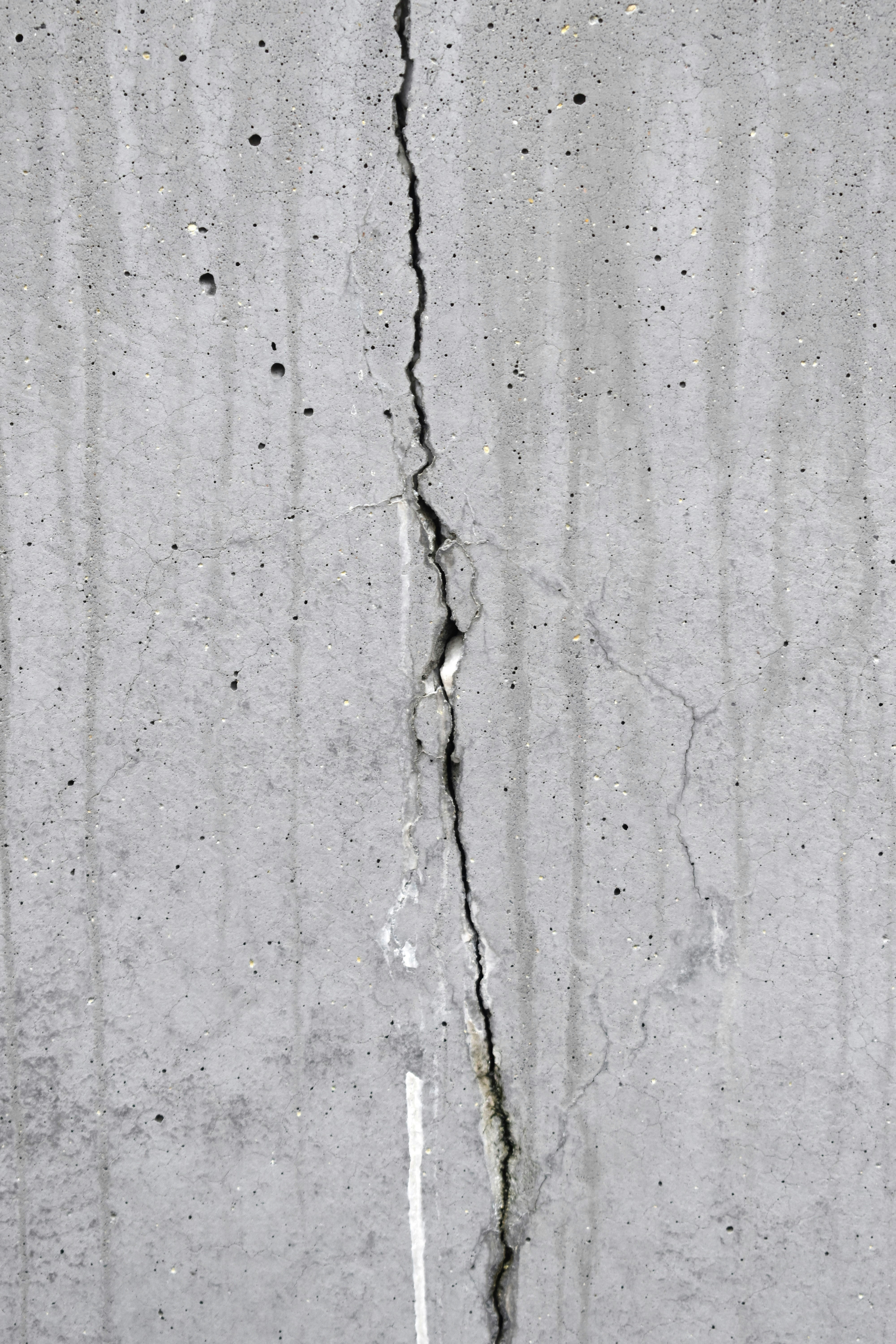
A foundation placed at 70 degrees can reach 140 degrees at its core within 48 hours. The temperature differentials that develop between hot cores and cooler surfaces determine whether the structure cracks before it ever carries load.
The marketing shows smooth pours creating perfect floors. It doesn't show the delamination that starts three months later when the surface profile wasn't right.
The mouth opening controls how close wood fibers get supported before the blade cuts them. That fraction-of-an-inch gap determines whether figured grain tears or slices clean.
The maturity method promises real-time concrete strength from temperature and time alone. The gap between prediction and reality reveals where elegant chemistry meets messy construction sites.
Jack planes bridge surface errors at 14 inches. Smoothing planes follow contours at 9 inches. The length difference creates two fundamentally different tools that look almost identical.
A 12-degree bed creates a 37-degree cutting angle. A 20-degree bed makes 45 degrees. That eight-degree difference determines what each block plane cuts cleanly and where each one struggles.
A 22-inch sole bridges surface variations that shorter planes follow. The jointer plane is the tool that actually creates flat - everything else just smooths what's already there.
A hand plane's sole is a moving straightedge. Whether it bridges surface errors or follows them depends entirely on length relative to the error's span - and that determines what the tool can do.
Nobody designed the belt sander sizing system. No committee decided 3 inches was the right width. The sizes emerged through decades of manufacturers copying each other and customers voting with purchases - and now they're permanent, the way most useful standards come to exist.
Belt sanders stayed tethered to wall outlets longer than almost any other power tool. The reason was physics - and what changed was battery chemistry, not the sanding.
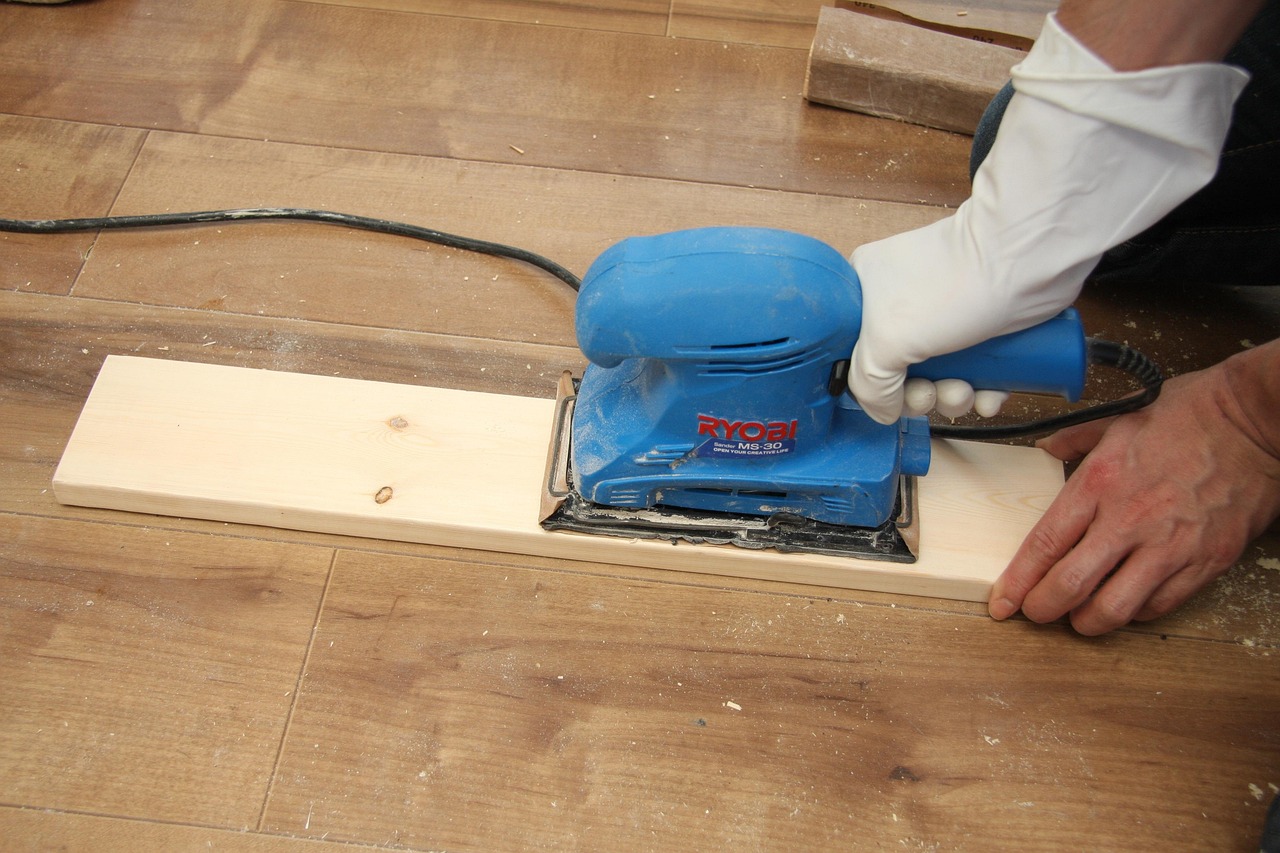
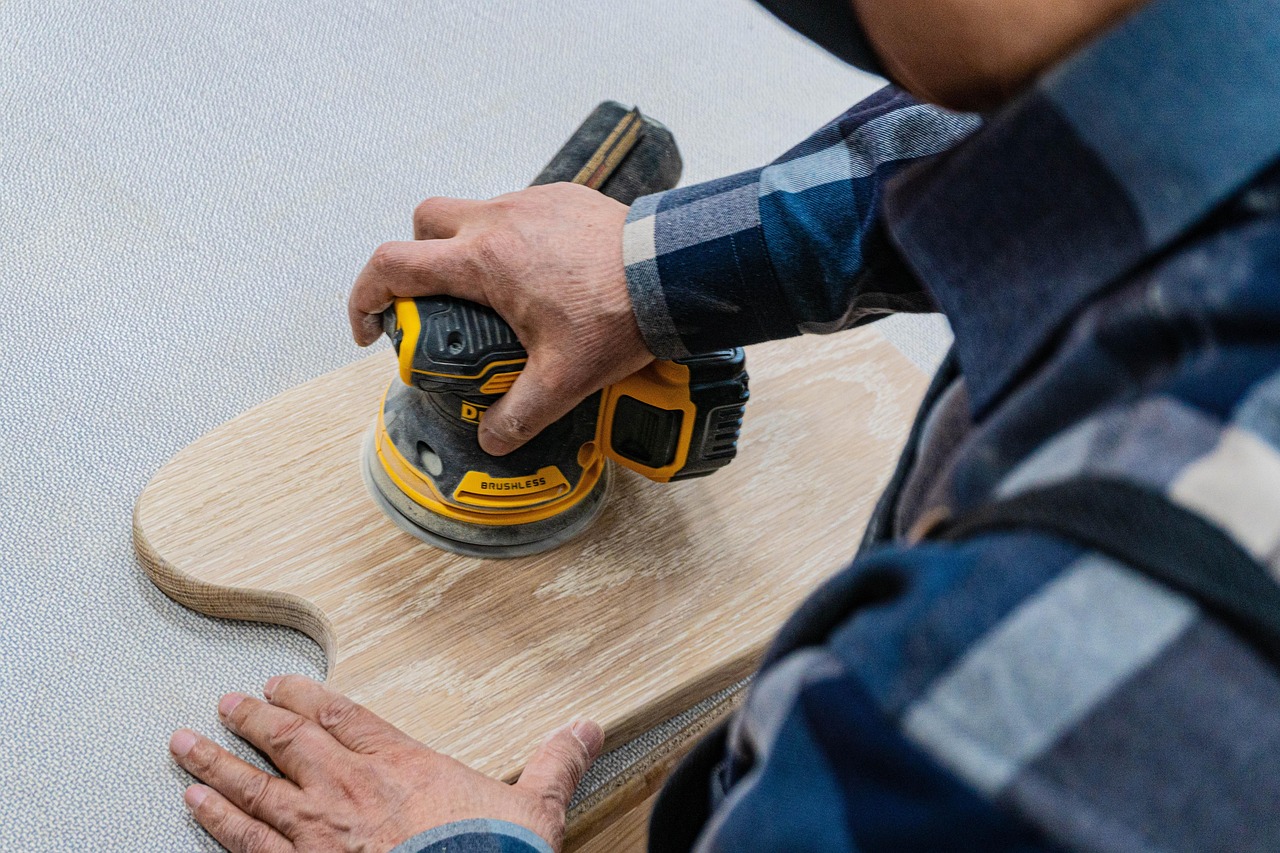
The random orbital sander should have killed the belt sander decades ago. It's lighter, safer, and leaves a surface you can actually finish. But on every serious job site and in every working cabinet shop, the belt sander is still there - pulled out for the jobs nothing else can touch.
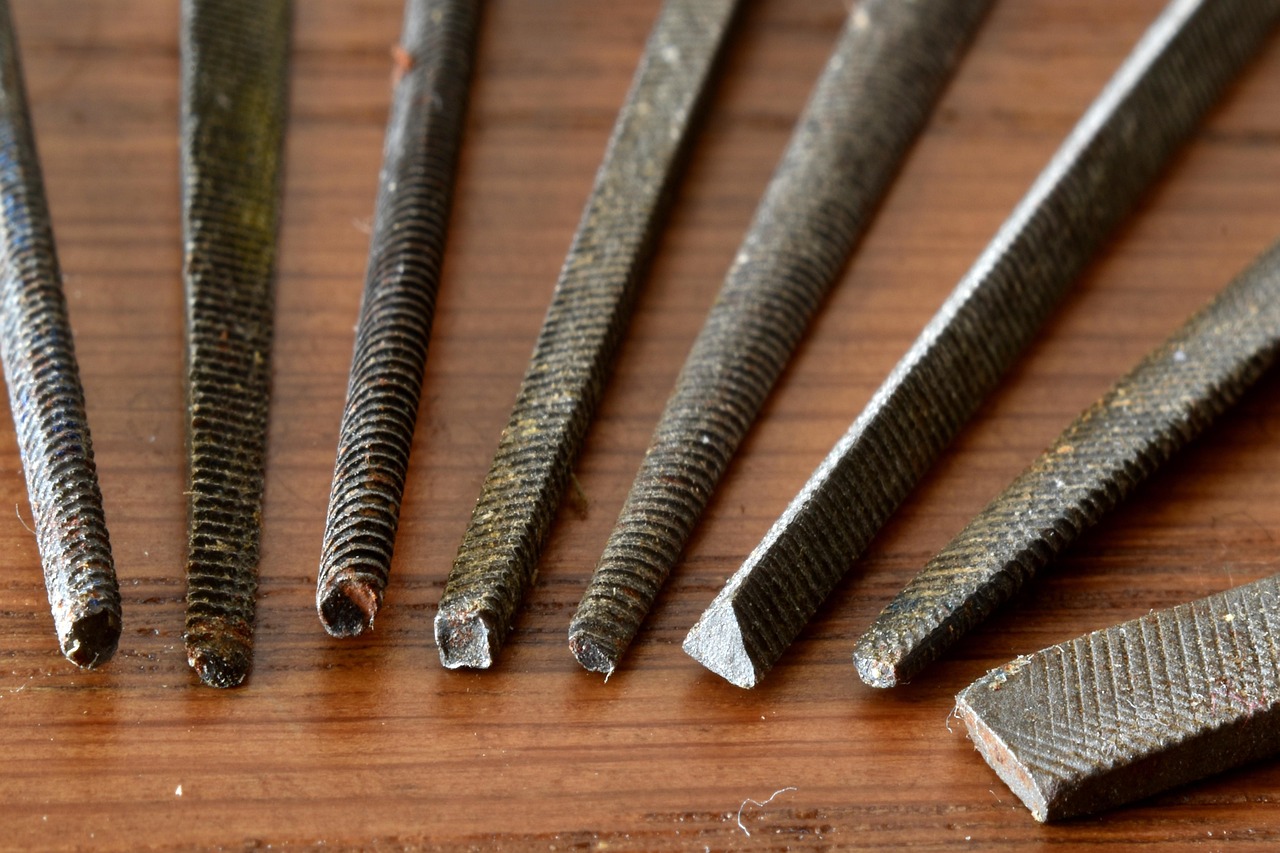
Rasps and files both remove material through abrasion, but their tooth geometry creates completely different cutting actions. One tears. The other shears. The distinction matters.
A four-in-hand rasp has coarse teeth on one side, fine teeth on the other, with flat and rounded faces. Modern manufacturing creates different cutting characteristics than vintage versions.
HSS was the machine shop revolution. Cobalt was aerospace's answer. Carbide was construction's demand for disposable performance. Three metals that look identical on the shelf, separated by the industrial eras that forced them into existence.
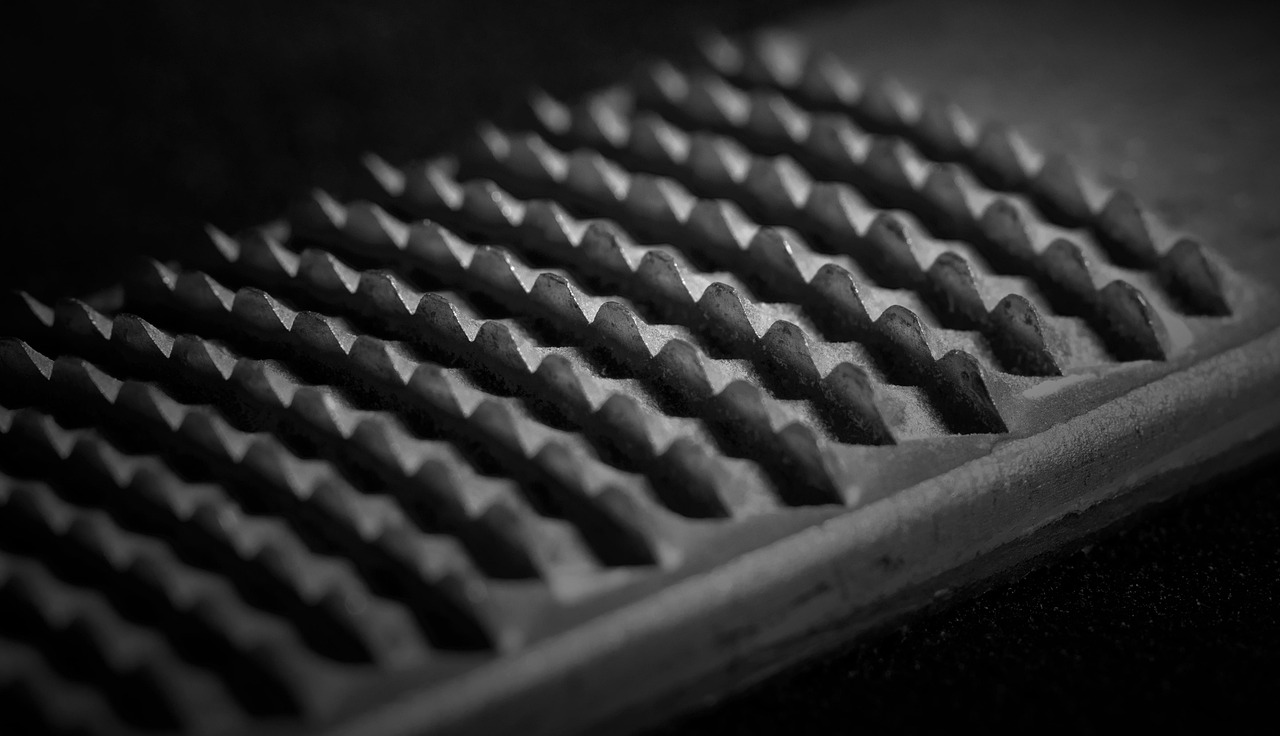
Hand-stitched rasps cut with random tooth patterns punched individually. Machine-cut rasps use uniform milled rows. The tooth formation determines cutting speed and surface finish.
Shinto saw rasps stack thin saw blades with offset teeth instead of using solid rasp bodies. The blade-based design creates different cutting action than conventional rasps.
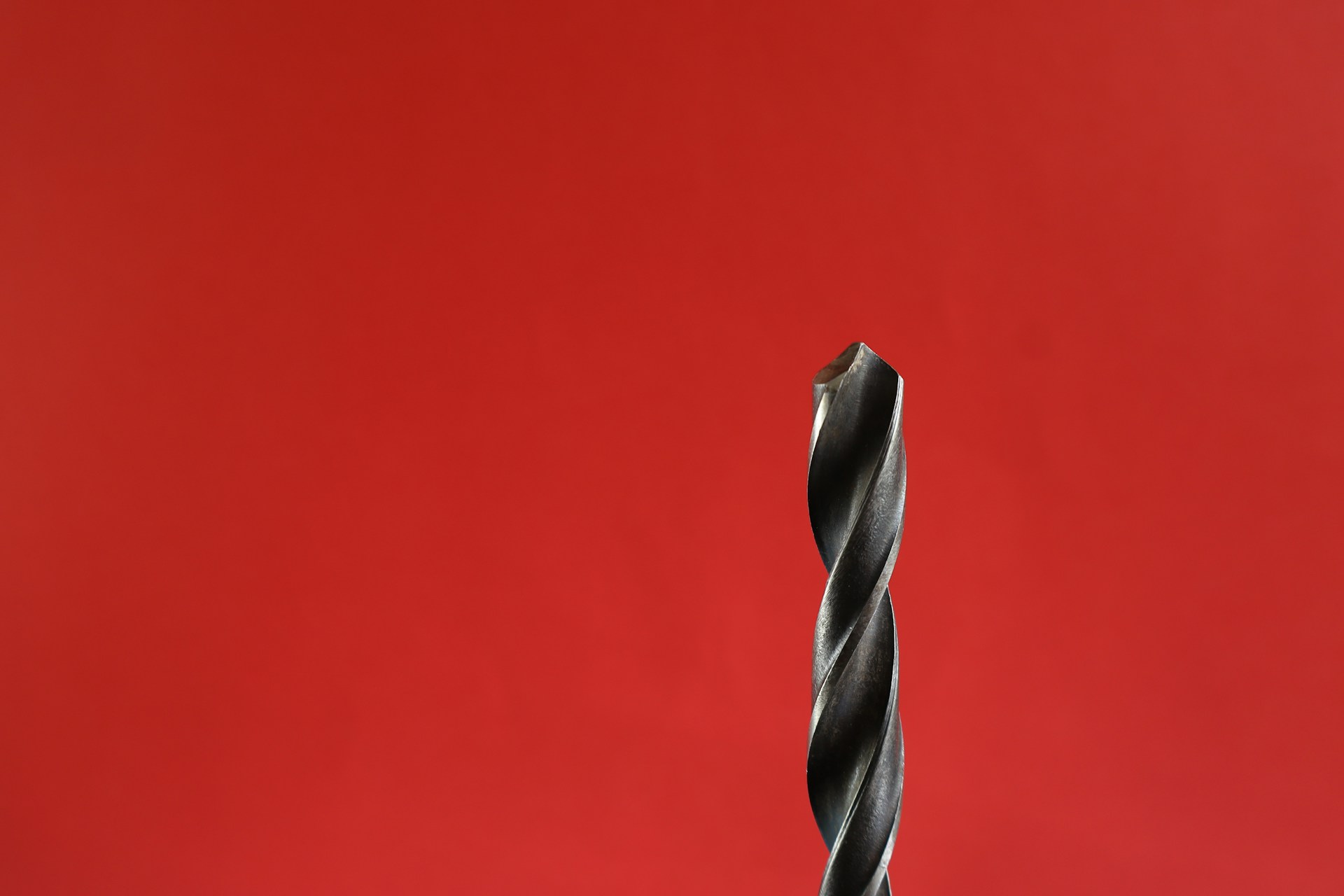
Black oxide, titanium nitride, cobalt coating - the surface treatments on drill bits aren't marketing distinctions. Each coating has specific chemistry that changes how the bit handles heat and friction.
Touch a drill bit after making a hole and it tells you what happened during the cut. The temperature is diagnostic - a language of friction, sharpness, and material behavior that experienced drillers learn to read.
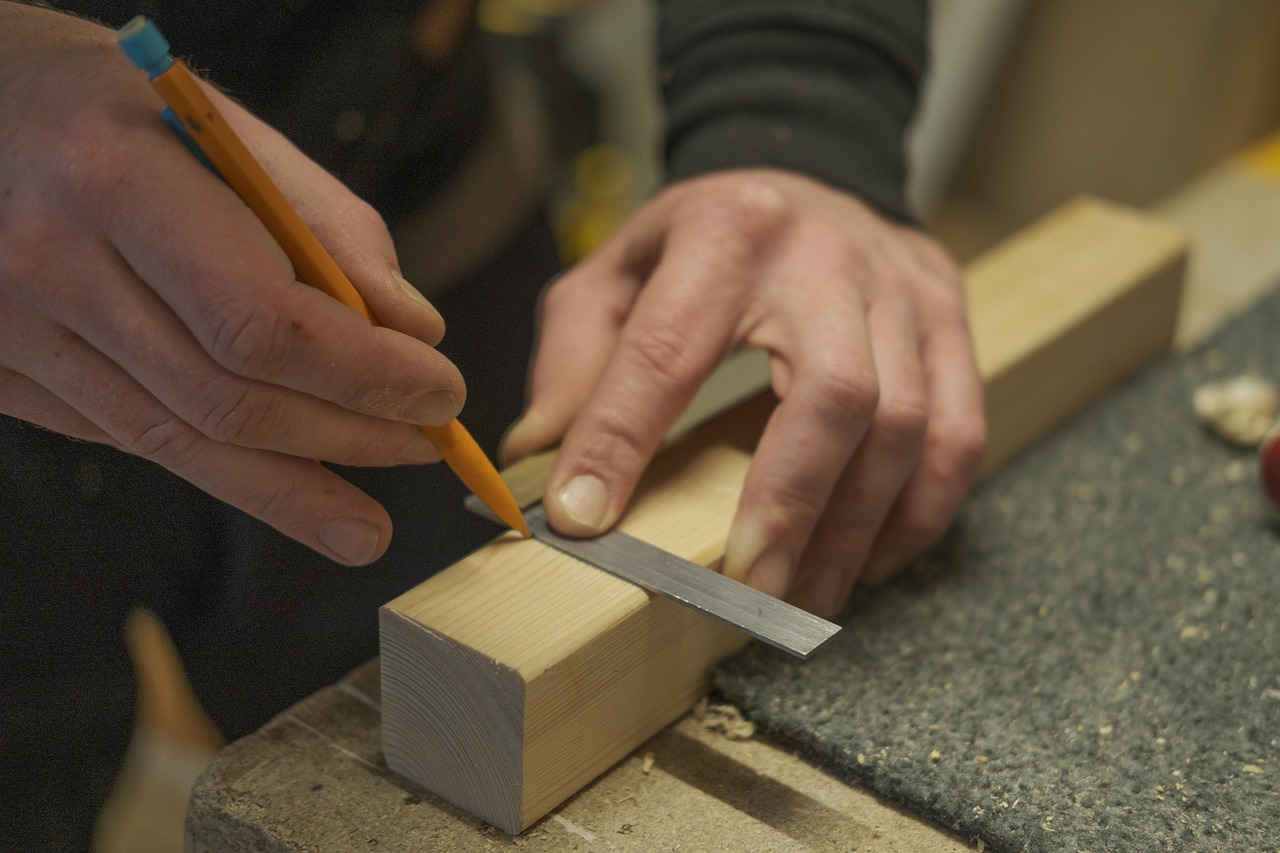
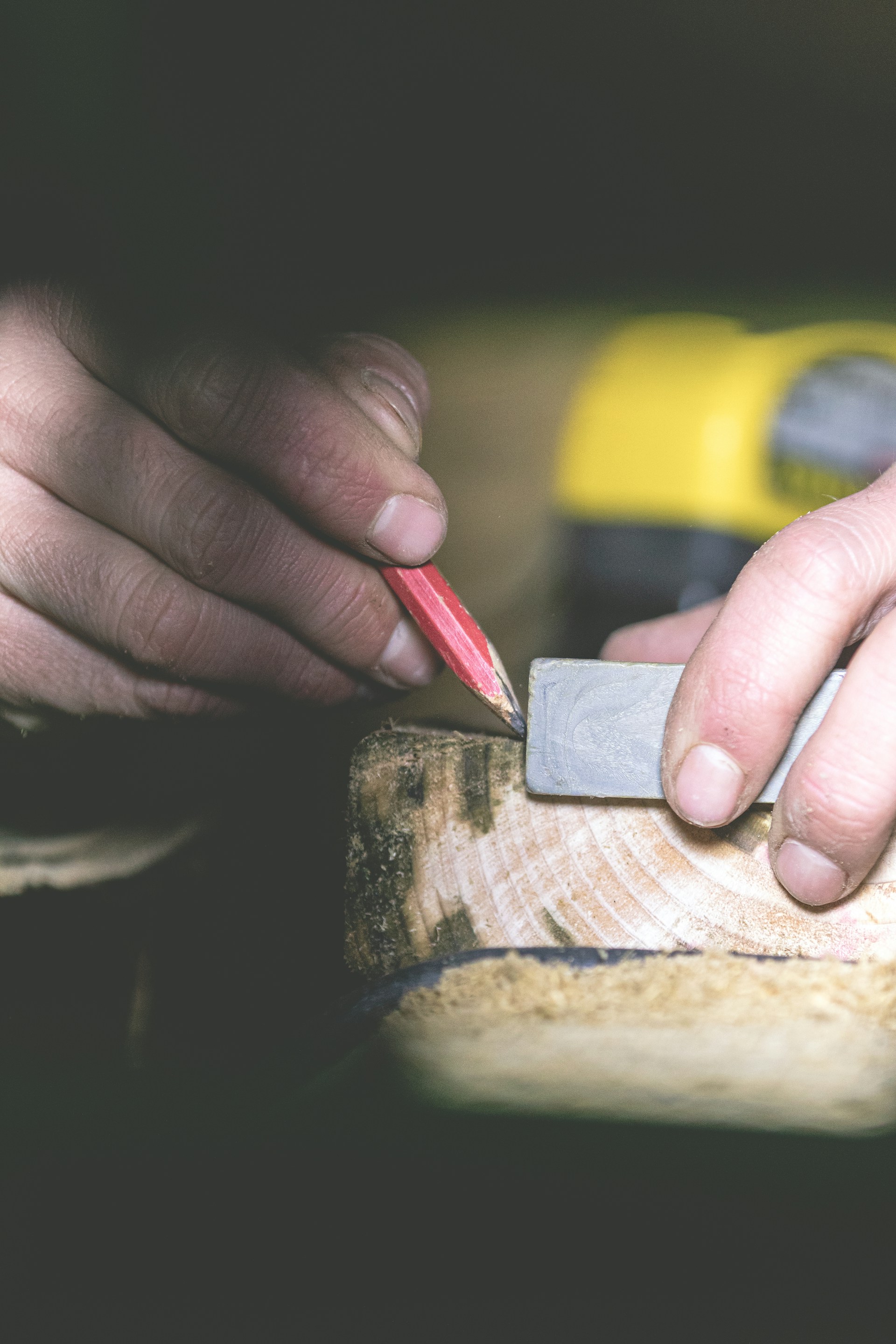
A pencil leaves graphite on the surface. A knife cuts into the fibers. A gauge maintains mechanical parallelism. Three different marks for three different stages of work - and the sequence matters.
Pins dig and separate wood fibers. Wheels roll and slice them. The mechanical difference sounds trivial until you mark across the grain on white oak - then it explains everything.
A marking gauge line that wanders, tears grain, or disappears entirely isn't a technique failure. It's a physics problem where wood structure, tool geometry, and reference edge quality are all working against each other.
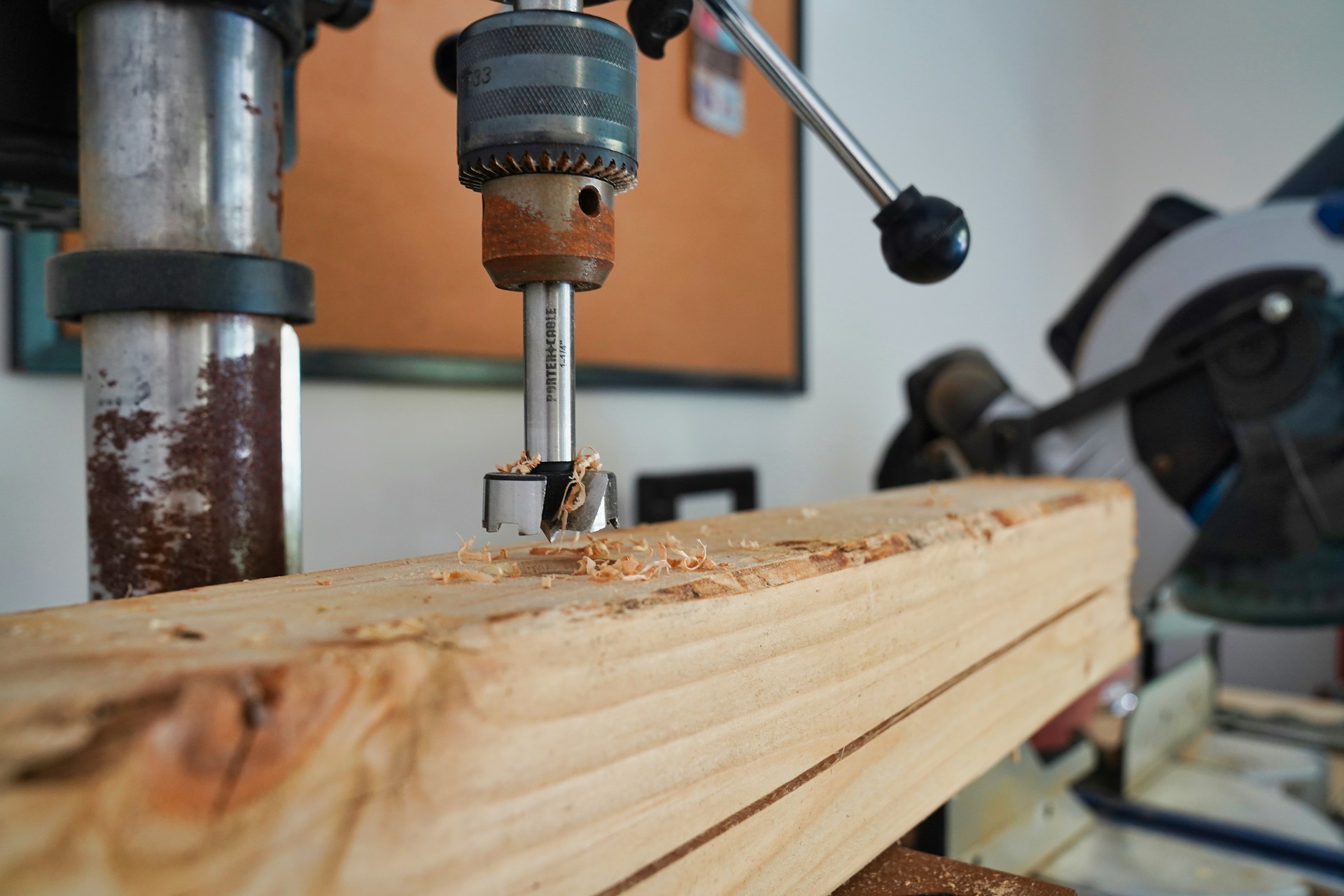
Every drill bit geometry is an answer to a specific question. Twist bits solved general purpose. Forstner bits solved flat bottoms. Auger bits solved self-feeding. The hardware store aisle is a museum of solved problems.
The fret saw blade catalog is a fossil record of two completely different woodworking traditions - the scroll art crowd and the joinery crowd - buying from the same suppliers for completely different reasons. Most of the 47 sizes in the catalog exist for one tradition. Most woodworkers only ever touch three.
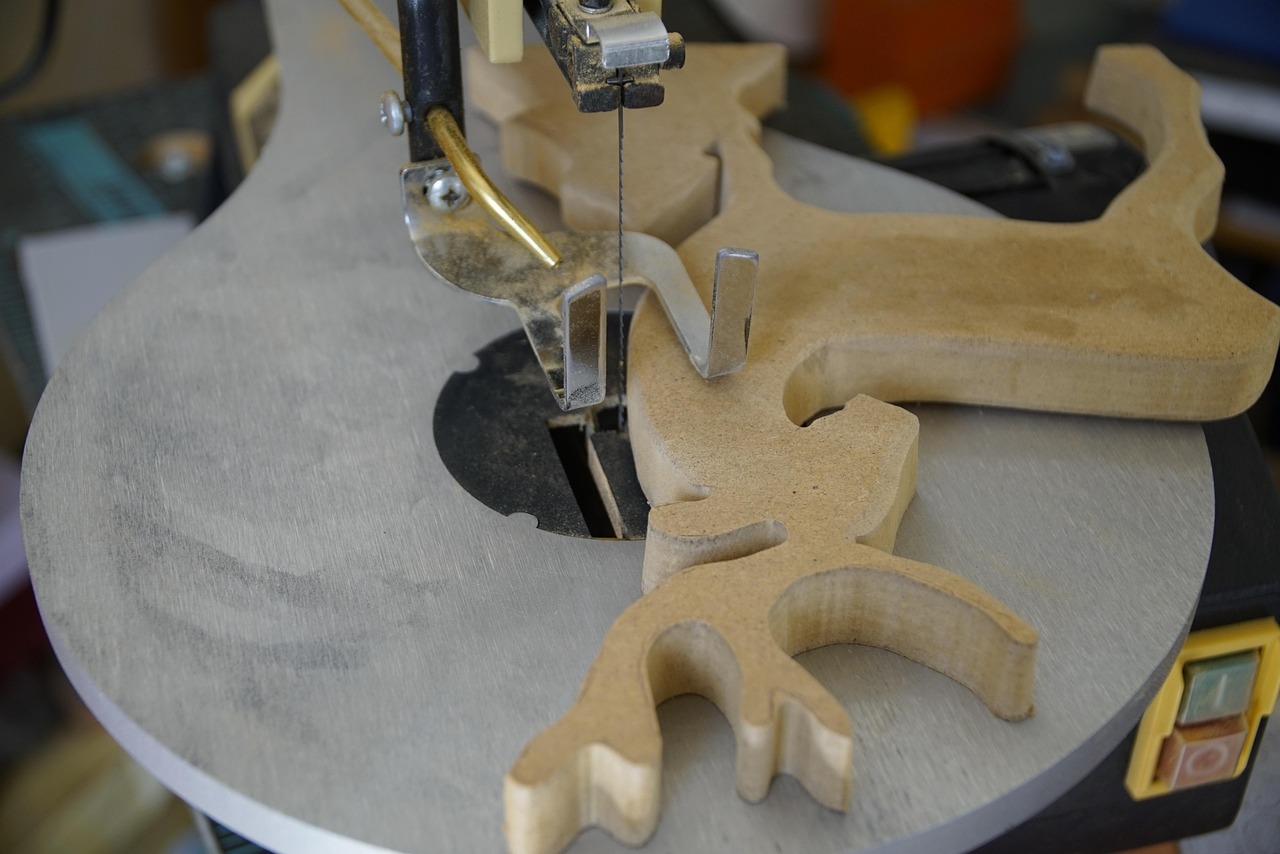
The fret saw, coping saw, and scroll saw all cut curves. They look similar enough that people mix them up constantly. But each one survives because it solves a problem the other two can't - and the finish carpenter with a $15 coping saw proves it every day.
Two saws that look identical but serve different purposes. What frame size, blade gauge, and intended materials reveal about fret saws and jeweler's saws.
Nobody designed the fret saw for dovetails. It was built for decorative scroll work in thin sheet material. The fact that it became the standard tool for clearing dovetail waste is pure accident - a blade width that happens to fit a dovetail kerf, a frame depth that happens to clear a workpiece, and a tooth count that happens to handle end grain.
Handheld jigs rely on your steady pressure while clamped jigs lock in place. Here's what that difference means for hole alignment and joint accuracy.
Dowel diameter affects glue surface area and mechanical resistance. Here's what happens when you scale up or down from standard sizes.
Dowel joints fail at predictable points: glue lines, misaligned holes, or the wood surrounding the dowel. Here's what actually breaks.
Those hairline cracks in plywood dowel joints? It's the alternating grain layers separating at their glue lines.
Impact drivers and collated screw guns both drive fasteners, but the mechanisms work differently and the productivity gap widens dramatically on large decking projects.
Collated screws solved the problem of loading fasteners one at a time. The plastic strip system is clever engineering that breaks apart exactly when it needs to.
Pressure-treated lumber isn't just soaked in chemicals. The process forces preservatives into the cell structure of wood using vacuum and pressure cycles that change how the material behaves.
Deck screws aren't wood screws with better marketing. The coatings, threads, and drive systems are engineered responses to the chemistry of treated lumber.
A corded detail sander draws 144 watts continuously from the wall. A cordless one starts around 126 watts and declines from there. The specs measure different physical quantities, making comparison almost meaningless.
Fein designed the oscillating multi-tool to remove casts from broken limbs. Decades later, remodeling crews use it for cutting, scraping, sanding, and anything else that fits in a tight space. The sanding attachment was an afterthought - and it performs like one.
In 1968, Italian manufacturer Rupes brought the first random orbital sander to market. The dual-motion design solved the swirl problem that had plagued powered sanding. The detail sander appeared later, born from the one thing circular pads can't do: corners.
Rotary lasers spin a single beam 360 degrees. Line lasers project a fan of light across a surface. The physics behind each design determines which jobs they can actually do.
Laser detectors don't detect lasers in the way most people assume. The photodiode array inside them works through a process that's more like echolocation than vision.
Green lasers are four times more visible to the human eye than red ones at the same power output. The optics behind that difference affect everything from battery life to outdoor range.
From ancient Egyptian string lines to GPS-guided laser systems, the history of keeping things level spans 4,000 years of engineering problem-solving.
In 1850, every door was solid wood all the way through. By 1960, most were thin skins over cardboard honeycomb. The history of doors is really the history of manufacturing economics slowly replacing material with air.
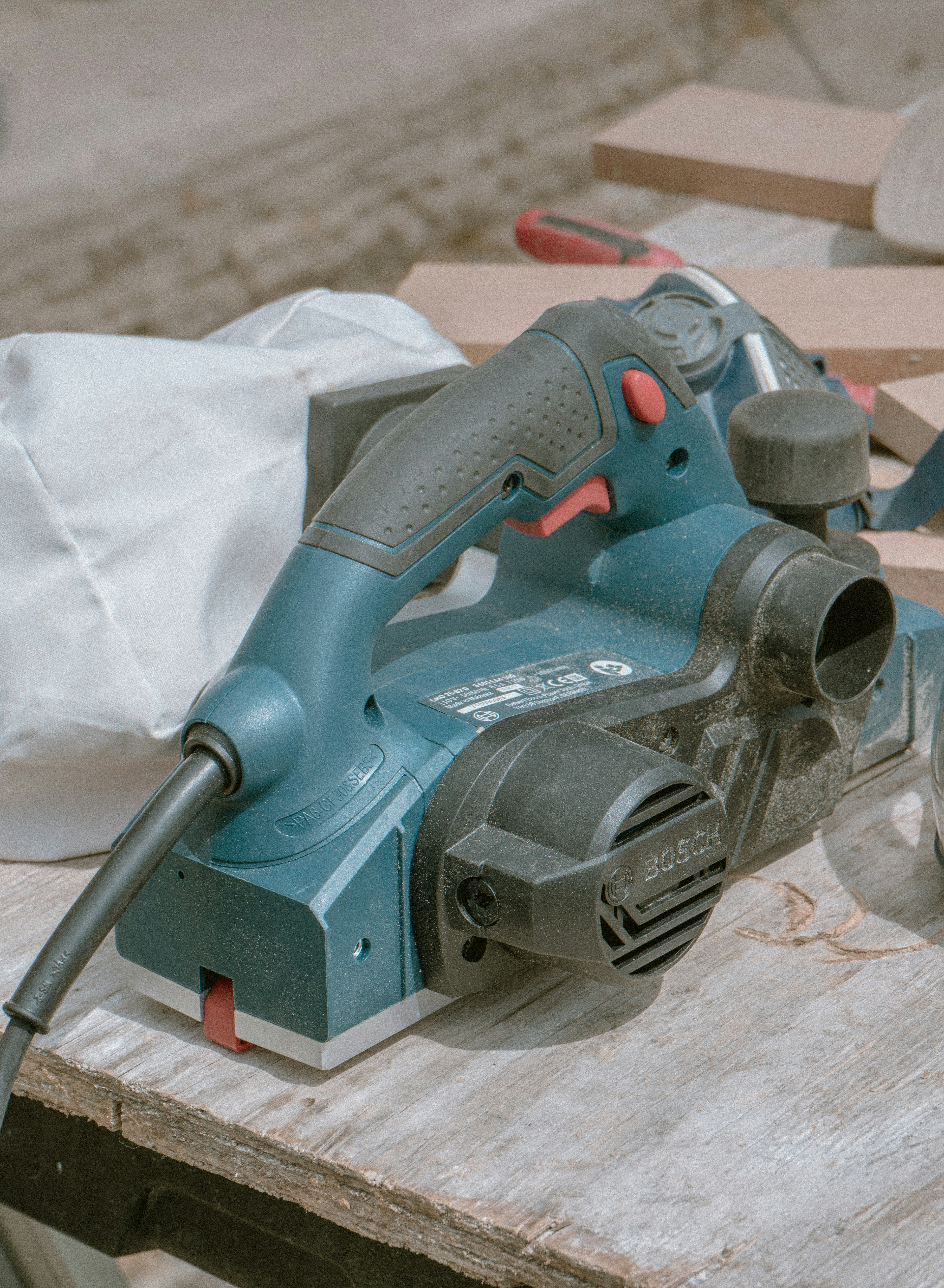
A 6.5 amp corded plane and an 18V cordless plane generate nearly identical wattage on paper. The spec sheet tells roughly half the story. Motor efficiency, gearing ratios, and battery chemistry determine the other half.
Leonard Bailey patented an adjustable plane mechanism in 1867 that became so dominant every bench plane in the world still uses it. Stanley manufactured that design for 130 years - and the arc from peak to decline tells the story of American toolmaking itself.
An examination of wood behavior under plane blades - how cellular structure and grain patterns create dramatically different planing results across species, from butter-smooth cherry to treacherous figured maple.
At 1,500 degrees, the steel either transforms correctly or becomes expensive scrap. The thirty-second window between proper hardening and ruined blade explains why two identical-looking plane irons can perform completely differently.
Marine plywood dulls saw blades twice as fast as standard plywood. The phenolic resin that makes it waterproof also makes it one of the most tool-hostile sheet goods in the lumber yard.
Aluminum is softer than most hardwoods. It also permanently destroys woodworking blades through a metallurgical welding process that begins on contact and becomes irreversible within minutes. The physics of why this happens - and why the damage looks nothing like normal wear.
Reclaimed lumber is a billion-dollar industry built on Instagram aesthetics and environmental credentials. Every barn beam is also a time capsule of agricultural history - hidden nails, embedded lead shot, wind-driven grit, and chemical residue that turns tool replacement into an operating cost.
Bamboo evolved silica deposits as armor against grazing animals thirty million years ago. That evolutionary adaptation now makes bamboo plywood the most tool-destructive panel product on the market - and the sustainable-material narrative doesn't mention the carbide it costs.
Wet wood dulls blades faster, creates rust on exposed steel within minutes, and produces heavy sawdust that clogs everything. Moisture content above 30% transforms routine cutting into equipment endurance testing.
Particle board dominates budget furniture. Standard jigsaw blades achieve clean cuts in it less than 30% of the time. The material and the tool are fundamentally incompatible, and the physics of why involves resin chemistry, density variation, and reciprocating motion.
Engineered hardwood solved the dimensional stability problem by stacking wood layers at alternating angles. That same engineering - the alternating grain, the adhesive bonds, the density variations - creates a cutting problem that reduces blade life by 80% compared to solid wood.
Cutting PVC reduces blade life by approximately 40% compared to wood - not from dulling, but from a chemical bonding process that coats your teeth in resolidified plastic while hydrochloric acid vapor eats the steel underneath.
Laminate flooring's scratch-resistant surface contains aluminum oxide - the same compound used in industrial grinding wheels. It ranks 9 on the Mohs hardness scale. Your carbide blade teeth rank 8.5. The floor is harder than the tool cutting it.
Hardie Board's 50-year warranty against rot and insects comes from the same crystalline silica that destroys saw blades in 50 feet. A material so hostile to tooling it spawned blade subscription services and a three-tier blade market that didn't exist twenty years ago.
Fiber cement cutting costs include specialized blades, dust collection compliance, and rapid blade wear. The total per-square-foot cost runs significantly higher than wood siding installation.
MDF looks innocent. Smooth, uniform, easy to work. But the urea-formaldehyde resin holding it together is silica-loaded engineite that eats carbide edges in ways solid wood never does.
Melamine's surface registers 7 on the Mohs hardness scale - harder than a steel nail. It contains the same aluminum oxide compound found in grinding wheels. Every cut is a sandblasting operation with chemical burns on top, and the North American cabinet industry runs on the stuff.
A stick, a block, and a sharp point. The marking gauge hasn't fundamentally changed since Roman woodworkers used one in Pompeii - and the reason it hasn't is the reason it works.
Stanley has been making block planes since the 1880s. What changed between then and now tells the story of American manufacturing in miniature - compressed into a tool that fits in one hand.
Water levels use physics that haven't changed since ancient Egypt. Laser levels use physics discovered in 1960. Both still have jobs the other can't do.
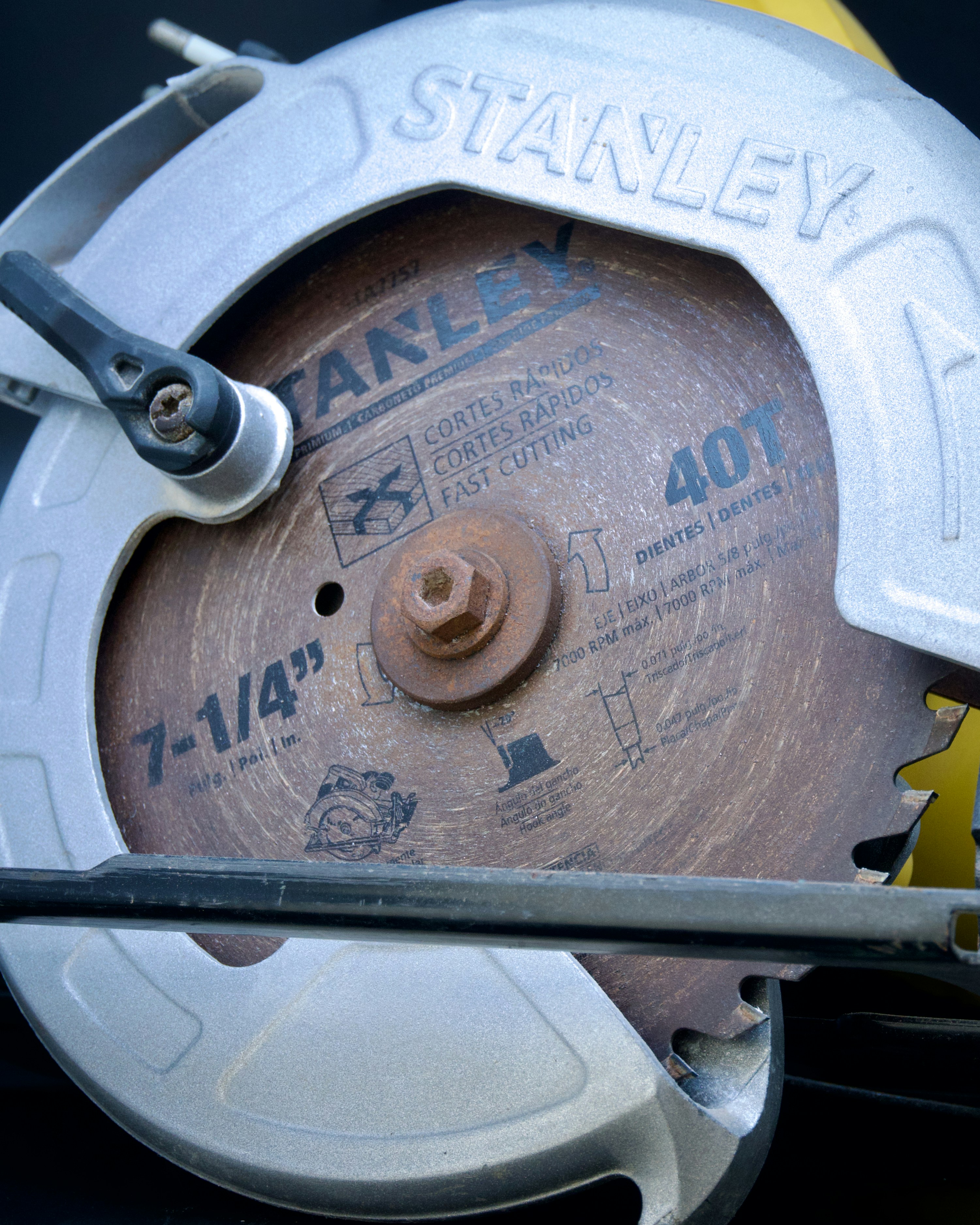
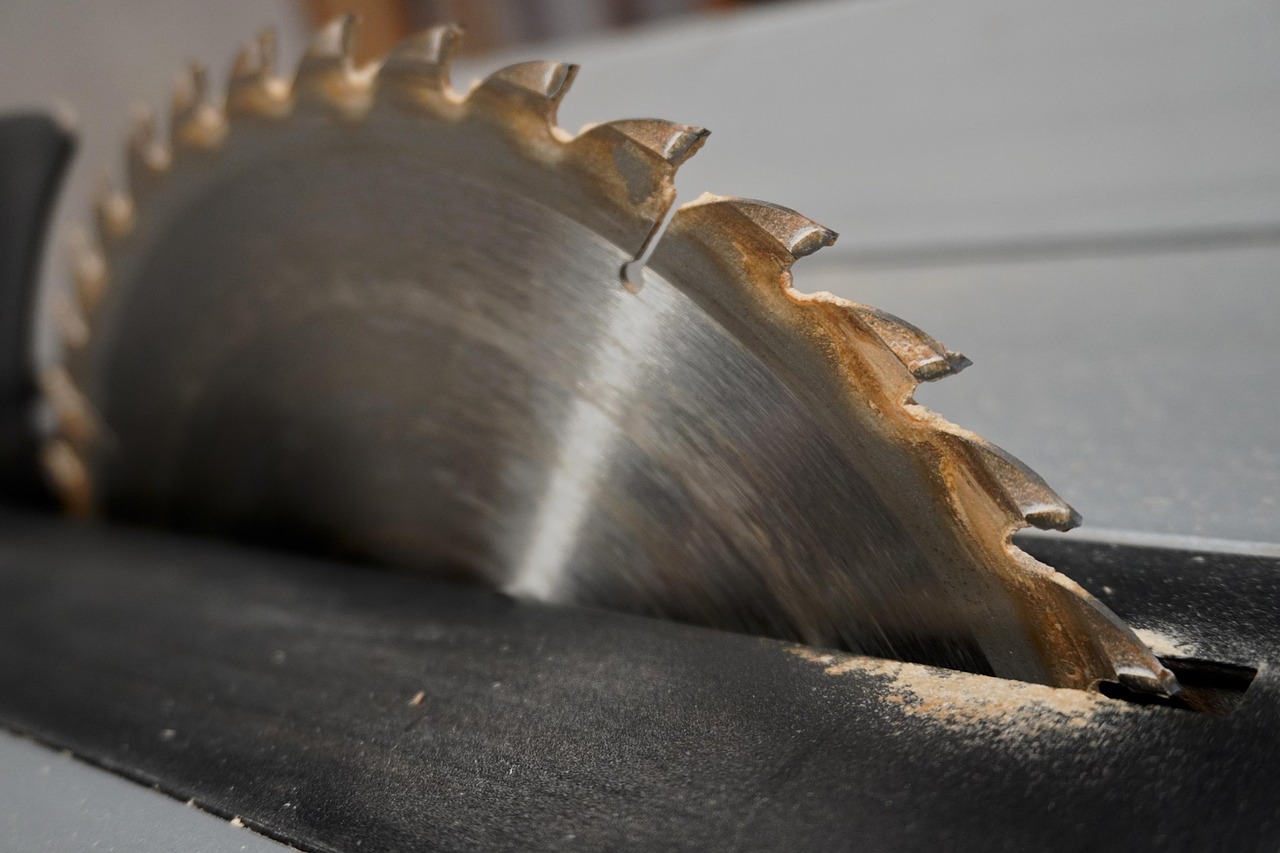
Three sheets into a framing job, the circular saw starts sounding different. The motor's working harder. The blade is coated in what looks like burnt caramel. That's the resin that holds OSB together, and it's been slowly suffocating your blade since the first cut.
The copper compounds that make pressure-treated lumber rot-proof are the same compounds that destroy saw blades in a fraction of their normal lifespan. Not through hardness or abrasion - through chemistry. The preservative attacks the cobalt binder in carbide teeth at the molecular level.
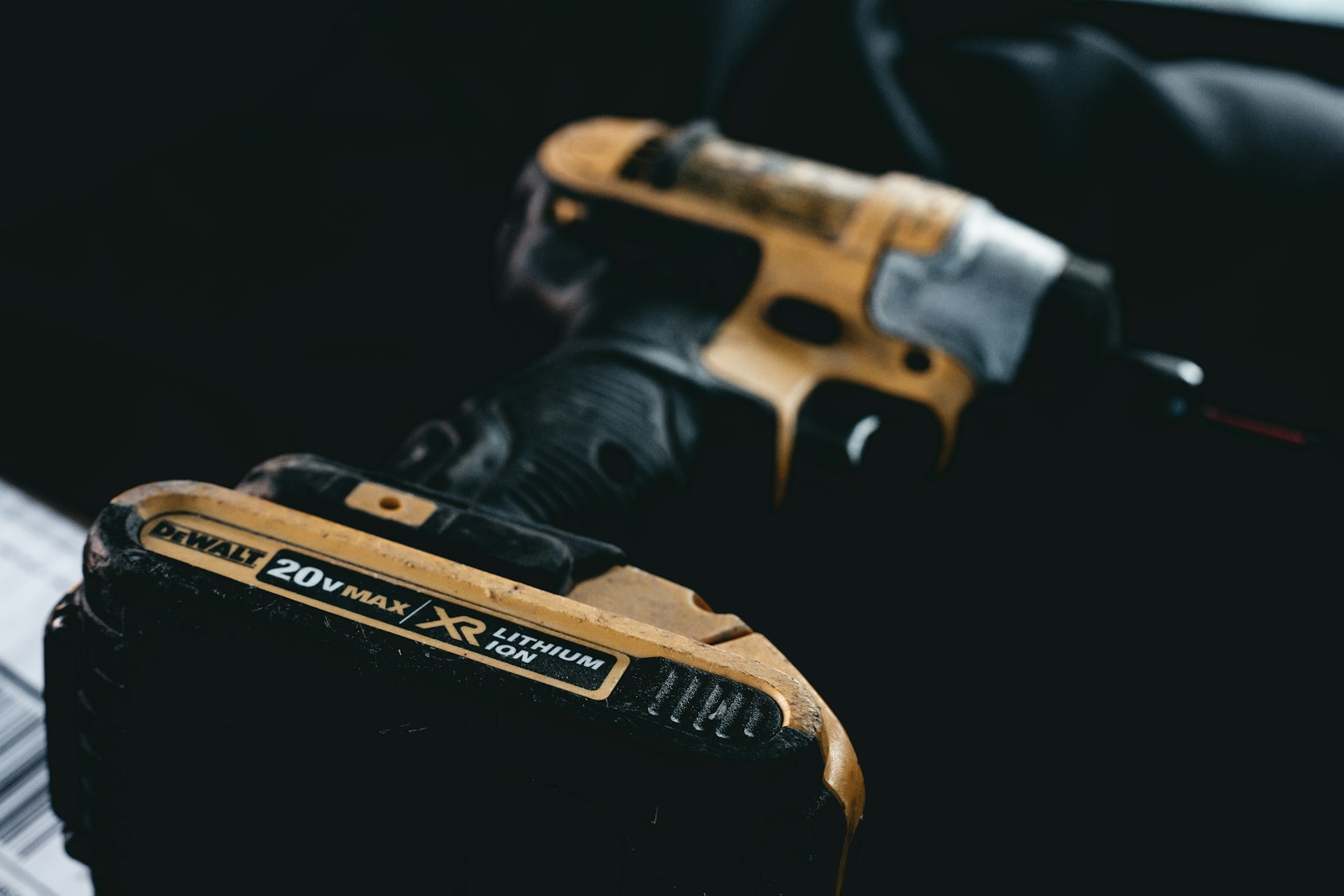
Milwaukee and DeWalt split the professional tool market almost exactly in half. Behind the brand loyalty, the corporate parent companies TTI and Stanley Black & Decker are fighting very different wars.
Fractional, metric, number, and letter sizing systems for drill bits all exist for different historical reasons. Every standard size, what the numbering actually means, and why a #7 bit is bigger than a 1/4-inch.
Impact driver sales grew 340% in a decade while drill sales stayed flat. The impact driver took over fastening entirely and started encroaching on drilling. Yet the drill didn't flinch. The physics of percussive delivery explain why both tools ended up on the same belt instead of one replacing the other.
Composite decking attacks saw blades through three mechanisms simultaneously - wood flour hammering, melting plastic coating the teeth, and mineral fillers grinding them down. The low-maintenance deck costs a small fortune in blade replacement to install.