Why Hardie Board Eats Blades for Breakfast
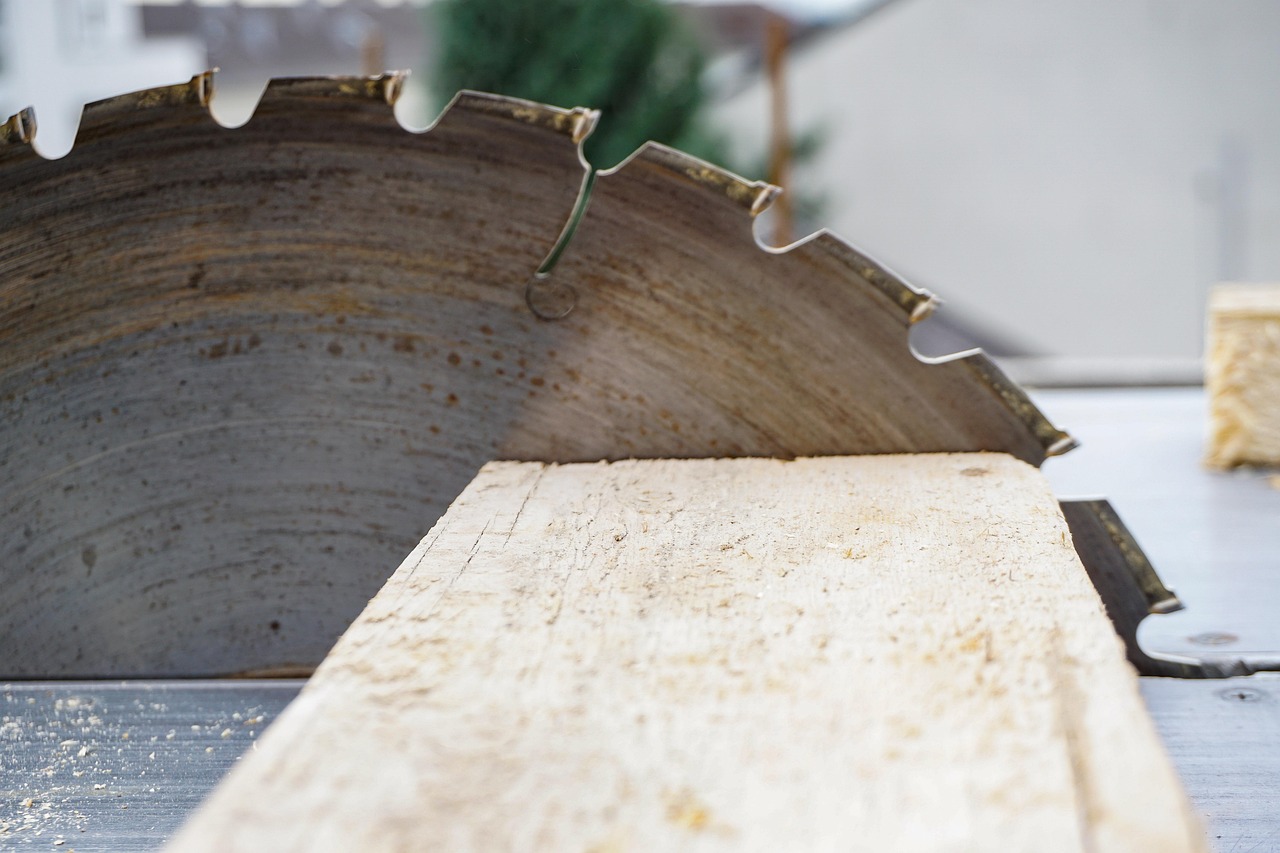
James Hardie Industries ships about 3.5 billion square feet of fiber cement siding annually in North America. That translates to roughly 875 million linear feet of cuts. And every single foot of those cuts is destroying someone's saw blade at a rate that makes other difficult materials look gentle.
A standard carbide blade loses measurable sharpness after 50 linear feet of Hardie Board. Compare that to 2,000 feet of pine. Even compared to notoriously destructive materials like pressure-treated lumber (200-400 feet) or laminate flooring's aluminum oxide wear layer (a few hundred feet), fiber cement occupies its own tier. The degradation happens fast enough that you can hear it - that clean cutting sound turns to a grinding whine within minutes.
Quartz vs Carbide
The culprit is right there in the composition: 8-10% crystalline silica by weight. Quartz, essentially. Ranking 7 on the Mohs hardness scale, versus steel's 4-4.5. When blade teeth meet those silica particles at 3,450 RPM, it's not cutting - it's micro-sandblasting. The carbide tips that handle hardwood knots without complaint get ground down particle by particle.
The full formulation reads like a recipe for blade destruction: Portland cement (25-40%), ground sand and silica (20-30%), cellulose fibers (10-15%), and water. The manufacturing process compresses these under 1,800 PSI and autoclave-cures them at 180 degrees Celsius for 10-12 hours, creating calcium silicate hydrate bonds - the same bonds that make concrete durable. The blade is cutting through a thin, flat piece of concrete reinforced with cellulose fiber.
Those silica particles average 10-30 microns in diameter. At typical circular saw speeds, each tooth impacts approximately 500,000 silica particles per linear foot of cut. The cellulose fibers add their own problem - coated in cement paste, they tear rather than cut, creating friction heat that reaches 400 degrees at the cutting edge. The heat accelerates carbide degradation through micro-fracturing, creating a visible transformation under magnification: what starts as a sharp, defined edge becomes rounded and pitted after just a few cuts.
The Blade Economy That Grew From Nothing
On a typical 2,000-square-foot siding job, a contractor goes through 13-20 blades. At that consumption rate, blades aren't tools anymore. They're consumables. The industry recognized this and responded with a market segmentation that didn't exist twenty years ago.
Budget tier: standard C3 carbide with basic triple-chip grind geometry. Essentially disposable. Built to die after one small job.
Mid tier: micro-grain carbide, expansion slots for thermal management, anti-stick coatings that reduce dust adhesion by 40-60% in lab conditions (less in humid climates, where the silica dust meets moisture and forms instant paste). These target remodelers doing occasional siding work.
Premium tier: polycrystalline diamond teeth. PCD rates 8,000 on the Knoop hardness scale - making silica particles look soft by comparison. A single PCD tooth outlasts 15-25 carbide teeth under field conditions. The blades cost what a decent miter saw costs. The math works for crews cutting fiber cement daily.
The tooth count went in the opposite direction from every other blade category. Traditional wood blades use 24-40 teeth. Fiber cement blades dropped to 4-8. Fewer teeth means less total surface being sandblasted simultaneously, and the wide gullet spacing provides ten times the dust ejection volume. A 4-tooth blade looks primitive next to a 60-tooth crosscut blade. It runs 200-300 degrees cooler, which is the only number that matters when the material is eating carbide at 500,000 impacts per foot.
Some manufacturers introduced blade subscription services - fresh blades shipped monthly to high-volume contractors. The business model resembles printer ink more than traditional tools: recurring revenue built on inevitable consumption. Blade recycling programs emerged alongside, because the carbide content in worn fiber cement blades makes collection profitable. The carbide gets refined and reprocessed into new teeth. The steel bodies become rebar. Some contractors report recycling revenue covering 10-15% of replacement costs.
The Silica Dust Problem
Walk past a fiber cement cutting station on a siding job and you'll see a white haze hanging in the air that looks like drywall dust but behaves nothing like it. Drywall dust is gypsum - relatively soft, relatively benign. This is crystalline silica, and the difference matters.
OSHA's permissible exposure limit for respirable crystalline silica is 50 micrograms per cubic meter over an 8-hour shift. A single 8-foot cut through Hardie Board without dust controls can generate 300-800 micrograms per cubic meter in the immediate work area. The particles peak in the 0.5 to 5 micron range - perfectly sized for deep lung penetration, too small for the body's upper respiratory defenses to catch, and too insoluble for lung tissue to dissolve once deposited.
OSHA violation citations for inadequate respiratory protection during fiber cement cutting climbed from 47 in 2019 to 281 in 2024. The agency now requires P100 filters minimum for any operation generating fiber cement dust. Wet cutting reduces airborne concentrations by 85% but creates a slurry that coats everything within ten feet and requires its own cleanup infrastructure.
The dust is also adhesive. Cement particles mixed with cellulose fibers create a paste on contact with any moisture, including morning dew on equipment. Contractors report chiseling dried fiber cement paste off saw bases with putty knives. The same material property that makes the siding bond to house wrap makes the dust bond to everything it touches. Soft-bristle cleanup doesn't work. Compressed air just relocates the problem. Water dissolves it but creates runoff that stains concrete and kills grass.
The silica exposure question is the elephant in the room for the siding industry. James Hardie and competitors have invested heavily in score-and-snap tools that avoid powered cutting entirely for straight cuts. Shears designed specifically for fiber cement can handle some profiles. But complex cuts - around windows, at roof angles, for j-channel returns - still require a saw. And every saw cut generates the dust.
The Irony of Durability
Fiber cement siding now covers 15-20% of new homes in North America, up from 5% in 2005. Every one of those installations left a trail of dead blades. The 50-year warranty against rot, insects, and weather comes from the same crystalline silica that limits blade life to minutes of continuous cutting.
The material that forced an entire tooling industry to reinvent itself - new blade geometries, new carbide formulations, coatings borrowed from aerospace, diamond technology trickling down from industrial cutting, subscription delivery models, recycling infrastructure - all of it grew from one material property. The quartz content that makes fiber cement weather-proof is the same quartz content that makes it blade-proof. The durability and the destructiveness are the same thing. They always were.
And the homeowner who chose fiber cement for its 50-year lifespan will likely never know that the installation cost includes a hundred dollars in dead blades, a specialized dust management protocol, and a regulatory framework that didn't exist before the product did. The siding that outlasts everything also outlasts every tool sent to cut it. That's not a design flaw. It's the entire point - expressed as collateral damage on the installation crew's equipment budget.